Blogs
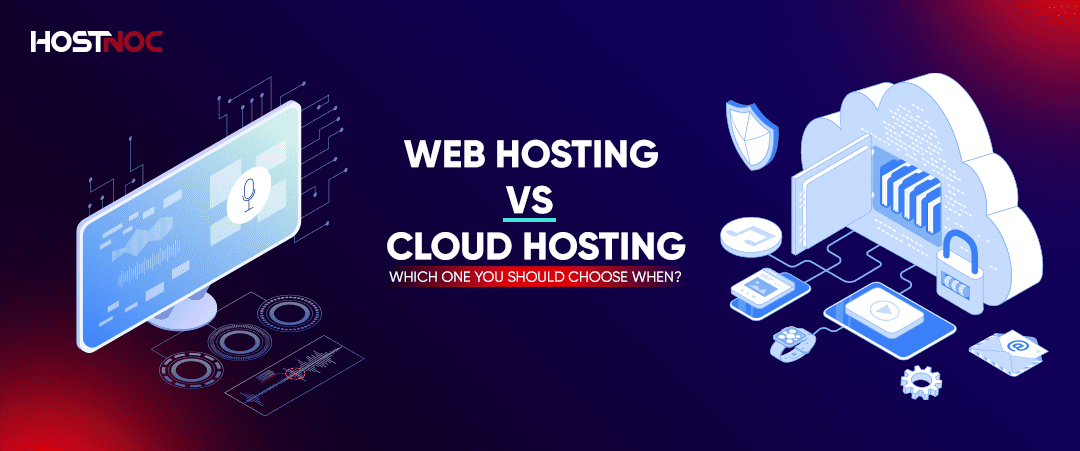
Choosing the right hosting can feel overwhelming—performance, scalability, and reliability are on the line, and the sheer number of types of web hosting only adds to the confusion. Without a clear understanding of the differences, advantages, and disadvantages, it’s easy to make costly mistakes and get stuck in the web hosting vs cloud hosting debate, leading to slow load times, poor scalability, and unreliable uptime. This comparison will sbreaks down the key differences, and provides a clear web hosting vs cloud hosting comparison so you can confidently choose
Web Hosting vs Cloud Hosting
What is Web Hosting?
Web hosting refers to the service that allows individuals and businesses to publish their websites on the internet. In traditional web hosting, your website is stored on a physical server in a data center. The server, which is managed by the hosting provider, runs your website and makes it accessible to users online.
Web hosting can come in several forms, such as shared hosting, dedicated hosting, and VPS (Virtual Private Server) hosting. In shared hosting, multiple websites are hosted on a single server, sharing its resources. Dedicated hosting, on the other hand, provides a dedicated server to a single website, offering greater performance and control. VPS hosting is a middle ground, where a physical server is divided into multiple virtual servers, each with its own resources.
Advantages of Web Hosting:
-
Cost-Effective:
Shared hosting plans are typically more affordable than cloud hosting because the cost is divided among multiple users.
-
Simplicity:
Web hosting services are often easier to set up and manage, making them a good option for individuals or small businesses with limited technical expertise.
-
Reliable Only For Small Businesses:
For smaller, less resource-intensive websites, traditional web hosting offers sufficient performance and uptime.
Disadvantages of Web Hosting:
-
Limited Scalability:
Since resources are limited to the server you’re hosted on, scaling your website can be challenging. If your website experiences a surge in traffic, it could slow down or crash.
-
Lack of Flexibility:
Shared hosting offers limited control over server configurations, which can be a drawback for users with specific performance or security needs.
-
Single Point of Failure:
If the physical server hosting your site experiences issues, your website will go offline.
What is Cloud Hosting?
Cloud hosting, on the other hand, utilizes a network of interconnected servers that work together to host websites. Unlike traditional hosting, where a single physical server is used, cloud hosting relies on a cloud infrastructure to distribute resources. This infrastructure is typically hosted by cloud service providers such as Amazon Web Services (AWS), Microsoft Azure, or Google Cloud Platform.
Cloud hosting offers a more dynamic and flexible approach. Resources such as CPU power, memory, and storage can be scaled up or down according to demand. Additionally, your website’s data is often replicated across multiple servers, ensuring redundancy and minimizing the risk of downtime.
Advantages of Cloud Hosting:
-
Scalability:
Cloud hosting allows you to easily scale your resources up or down depending on traffic and usage needs. This makes it ideal for growing businesses or websites with fluctuating traffic.
-
Reliability:
With cloud hosting, your website data is stored on multiple servers. This redundancy ensures that even if one server fails, your website remains online and functional.
-
Flexibility:
Cloud hosting provides more control over server configurations and software, allowing for customized solutions for different website needs.
-
Performance:
Cloud hosting can deliver high performance, especially for resource-intensive websites, due to the ability to allocate more resources dynamically.
Disadvantages of Cloud Hosting:
-
Higher Costs:
While cloud hosting is scalable, it can be more expensive than traditional web hosting, especially for websites with high traffic or complex resource needs.
-
Complexity:
Setting up and managing cloud hosting can require more technical expertise. It might not be the best option for users without in-depth IT knowledge.
-
Potential for Overuse:
Since cloud hosting resources are scalable, it can be tempting to continuously scale up, leading to higher costs if not monitored carefully.
Web Hosting vs Cloud Hosting: Key Differences
-
Resource Allocation:
Web Hosting: Resources such as CPU, RAM, and storage are fixed and tied to a physical server, which can limit scalability and performance.
Cloud Hosting: Resources are virtualized and distributed across multiple servers, offering high scalability and flexibility.
-
Uptime and Reliability:
Web Hosting: A website hosted on a single server may experience downtime if the server fails.
Cloud Hosting: Cloud hosting offers better reliability due to its redundant infrastructure, where data is replicated across multiple servers, minimizing downtime.
-
Scalability:
Web Hosting: Traditional web hosting plans often have fixed resources, requiring manual upgrades to accommodate growth.
Cloud Hosting: Cloud hosting allows automatic scaling of resources to meet demand, ensuring consistent performance even during traffic spikes.
-
Cost:
Web Hosting: Web hosting is typically billed at a fixed rate, with prices depending on the hosting type and plan chosen.
Cloud Hosting: Cloud hosting operates on a pay-as-you-go model, where you only pay for the resources you use, which can be more cost-effective but harder to predict.
-
Control and Customization:
Web Hosting: Web hosting offers limited customization and control over the server environment, especially in shared hosting scenarios.
Cloud Hosting: Cloud hosting provides greater control over the server configuration and environment, making it ideal for businesses with specialized needs.
Web Hosting vs Cloud Hosting: When to Choose Which?
If you are running a small website with minimal traffic and want a budget-friendly, easy-to-manage solution, traditional web hosting may be the right choice. It’s an excellent option for personal blogs, small business sites, or informational pages.
On the other hand, if you anticipate rapid growth, need high availability, or run resource-intensive applications, cloud hosting may be the better choice. The scalability, reliability, and flexibility it offers make it a strong option for eCommerce sites, large businesses, or websites with unpredictable traffic patterns.
Conclusion
In the debate of web hosting vs cloud hosting, each option serves different purposes depending on your website’s goals. Web hosting remains an affordable and user-friendly choice for small websites with steady traffic, while cloud hosting stands out for its scalability, reliability, and flexibility—making it better suited for expanding businesses and high-performance applications. By carefully evaluating the differences in web hosting vs cloud hosting and aligning them with your current needs and future growth plans, you can choose a solution that delivers optimal performance, cost efficiency, and long-term scalability.
Web Hosting vs Cloud Hosting. Which one would you choose and why? Share it with us in the comments section below.

Featured Post
Bare Metal vs Cloud Computing: A Comprehensive Comparison
Key Takeaways Bare metal servers deliver maximum performance, full hardware control, and...

Sarmad Hasan
July 8, 2026
Managed vs. Unmanaged VPS: A Total Cost of Ownership (TCO) Breakdown
Choosing between managed and unmanaged VPS hosting is not just a technical...
Sarmad Hasan
July 3, 2026
Windows VPS Hosting vs Linux VPS Hosting: A Detailed Comparison
Key Takeaways VPS hosting provides dedicated resources and full server control, offering...
Sarmad Hasan
June 26, 2026