Blogs
Key Takeaways
- A dedicated server for AI delivers maximum performance, control, and data security compared to shared or cloud environments.
- It is ideal for training large models, running inference at scale, and handling sensitive datasets.
- Choosing the right hardware—especially GPUs like NVIDIA A100 or NVIDIA H100—is critical to success.
- Dedicated AI servers reduce latency, improve throughput, and eliminate “noisy neighbor” issues.
- Organizations using AI at scale (e.g., OpenAI or Google) rely heavily on dedicated infrastructure for performance and reliability.
As artificial intelligence workloads grow more complex, traditional hosting solutions—like shared servers or basic cloud instances—struggle to keep up. Training deep learning models, processing massive datasets, and deploying real-time AI applications demand immense computational power, low latency, and consistent performance. Many organizations face bottlenecks, unpredictable costs, and performance throttling.
Imagine training a neural network only to have it slowed down by shared resources or unexpected usage spikes from other tenants. Worse, sensitive data processed in AI pipelines may be exposed to compliance risks in multi-tenant environments. For industries like healthcare, finance, or defense, this is not just inconvenient—it’s unacceptable.
A dedicated server for AI solves these challenges by providing exclusive access to high-performance hardware tailored specifically for AI workloads. With full control over resources, optimized configurations, and enhanced security, dedicated AI servers are the backbone of serious machine learning and deep learning operations.
What is a Dedicated Server for AI?
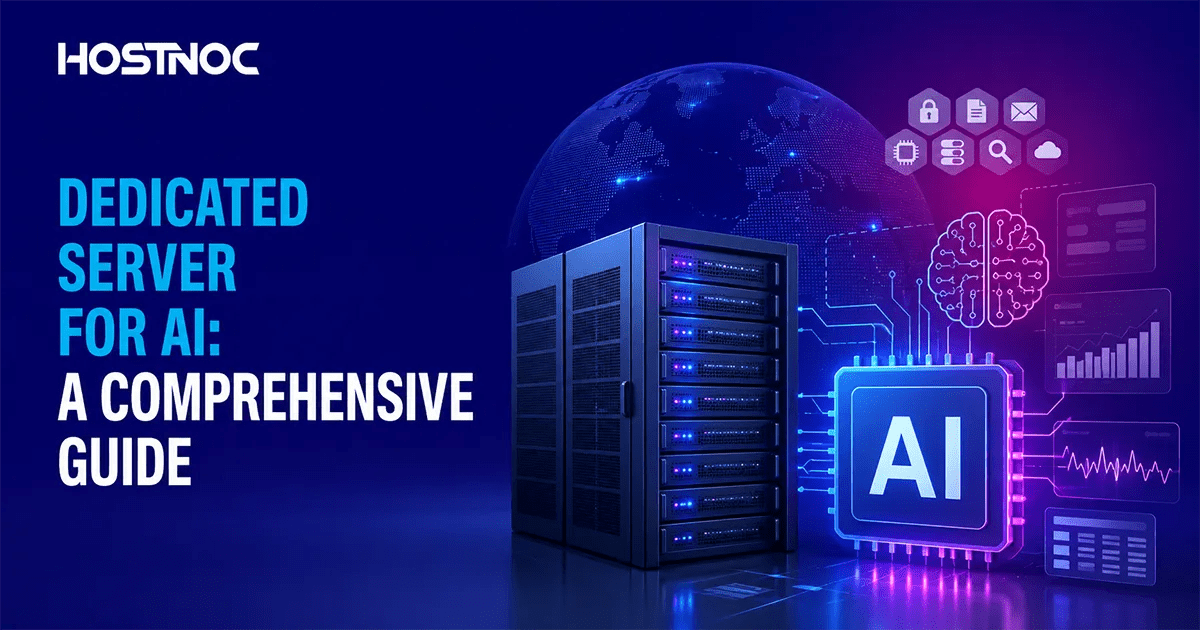
A dedicated AI server is a physical machine exclusively allocated to a single user or organization, optimized for artificial intelligence workloads such as training models, running inference, and processing large-scale data.
Unlike shared hosting or virtual private servers, dedicated AI servers provide:
- Exclusive hardware resources
- Custom GPU/CPU configurations
- Enhanced data security
- Predictable performance
These servers often integrate cutting-edge components like GPUs from NVIDIA and AI frameworks such as TensorFlow or PyTorch.

Why Do AI Workloads Need Dedicated Servers?
1. High Computational Demand
AI models—especially in domains like natural language processing and computer vision—require massive parallel processing. GPUs like the NVIDIA A100 can accelerate training dramatically compared to CPUs alone.
2. Large Dataset Handling
AI systems often process terabytes or petabytes of data. Dedicated servers ensure fast read/write speeds with NVMe storage and optimized memory pipelines.
3. Consistent Performance
Shared environments suffer from resource contention. Dedicated servers eliminate this issue, ensuring stable training times and reliable inference speeds.
4. Data Privacy & Compliance
Organizations handling sensitive data benefit from full control over their infrastructure, avoiding risks associated with multi-tenant cloud systems.
Dedicated Server for AI: Key Components
GPU Acceleration
GPUs are the heart of AI computation. Modern servers may include:
- NVIDIA H100 for cutting-edge AI workloads
- NVIDIA RTX 4090 for cost-effective deep learning
CPU and Memory
While GPUs handle parallel tasks, CPUs manage orchestration. High-core processors and large RAM pools ensure smooth data preprocessing and pipeline management.
Storage
AI workloads require high-speed storage:
- NVMe SSDs for fast access
- RAID configurations for redundancy
Networking
Low-latency networking is essential for distributed training, especially in multi-node setups.
Dedicated Server For AI vs Cloud for AI
Dedicated Servers
- Full hardware control
- No resource sharing
- Predictable costs over time
- Ideal for long-term, intensive workloads
Cloud Solutions
Providers like Amazon Web Services and Microsoft Azure offer flexibility and scalability, but:
- Costs can escalate quickly
- Performance may vary
- Limited hardware customization
Bottom line: If you run continuous AI workloads, dedicated servers are often more cost-efficient and reliable.
Dedicated Server For AI: Use Cases
1. Model Training
Training large language models or deep neural networks requires sustained GPU power and stable environments.
2. Real-Time Inference
Applications like recommendation engines, fraud detection, and autonomous systems need low-latency predictions.
3. Computer Vision
Processing high-resolution images and videos benefits from GPU acceleration and fast storage.
4. Natural Language Processing
Frameworks used by systems similar to OpenAI require powerful infrastructure for training and deployment.
Dedicated Server For AI: Key Benefits
Performance Optimization
Dedicated servers allow fine-tuning at every level—from BIOS settings to GPU allocation.
Scalability
Organizations can scale horizontally by adding more dedicated nodes.
Security
Full control ensures compliance with regulations like GDPR or HIPAA.
Cost Efficiency (Long-Term)
While initial costs are higher, dedicated servers eliminate recurring cloud expenses for heavy workloads.
Dedicated Server For AI: Challenges
Upfront Cost
Dedicated hardware requires significant initial investment.
Maintenance
Unlike cloud services, you are responsible for hardware upkeep unless managed services are included.
Expertise Required
Configuring AI infrastructure demands technical expertise in networking, storage, and machine learning frameworks.
How to Choose the Right Dedicated Server for AI?
- Define Workload Type
Training vs inference requires different configurations. - Select GPU Type
High-end GPUs like NVIDIA H100 for advanced workloads; mid-range GPUs for smaller projects. - Evaluate Storage Needs
Choose NVMe for speed and HDD for archival storage. - Consider Bandwidth
High-speed networking is essential for distributed AI. - Check Provider Reputation
Providers with experience in AI infrastructure offer better reliability and support.
Future of Dedicated Server for AI
The demand for AI infrastructure continues to grow, driven by advancements in deep learning, generative AI, and edge computing. Companies like NVIDIA are pushing hardware innovation, while organizations such as Google develop custom AI chips.
Dedicated servers will remain critical for:
- Large-scale AI training
- Enterprise-grade AI deployments
- Privacy-sensitive applications
Conclusion
Dedicated servers for AI represent the gold standard for performance, control, and reliability in machine learning infrastructure. While they require higher upfront investment and expertise, the benefits far outweigh the drawbacks for organizations serious about AI innovation. Whether you’re training next-generation models or deploying real-time AI applications, dedicated infrastructure provides the foundation needed to succeed in an increasingly data-driven world.
Frequently Asked Questions About Dedicated Server for AI

What is the difference between a dedicated server and a GPU server?
A dedicated server is a physical machine assigned to one user, while a GPU server specifically includes GPUs for accelerated computing. Most AI dedicated servers are GPU servers.
Are dedicated servers better than cloud for AI?
For continuous, high-intensity workloads, yes. Dedicated servers offer better cost efficiency and consistent performance.
How many GPUs do I need for AI?
It depends on your workload. Small models may need one GPU, while large-scale training may require multiple GPUs, like NVIDIA A100 clusters.
What software is used on dedicated AI servers?
Common tools include TensorFlow, PyTorch, and container platforms like Docker.
Can startups use dedicated AI servers?
Yes, but many startups begin with cloud services and transition to dedicated servers as workloads scale.

Featured Post
Dedicated Server for Agencies: A Complete Guide
Agencies today manage multiple client websites, applications, and...

Sarmad Hasan
July 13, 2026
Does Borderlands 3 Have Dedicated Servers?
No. Borderlands 3 does not use dedicated servers. Multi player gaming sessions...

saad ullah
July 8, 2026
Data Center Market Share 2026: Hyperscalers vs. Colocation vs. Enterprise
The global data center industry is undergoing one of the most significant...
Sarmad Hasan
July 1, 2026