Blogs

Cisco Live EMEA 2026: Powering the AI Era with Smarter Networks, Security, Collaboration and Agentic Intelligence
February 25, 2026
Dedicated Server with Backup: Everything You Need To Know
March 2, 2026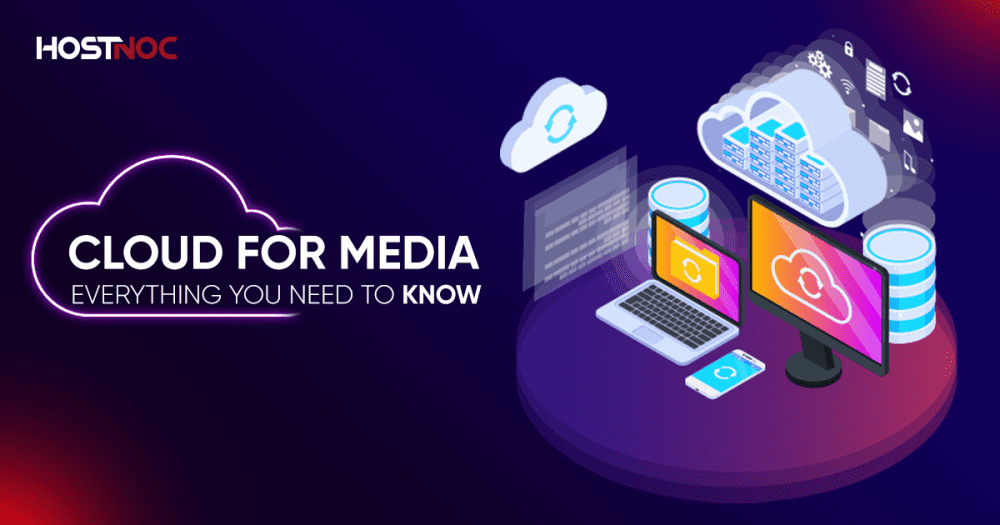
Cloud for Media refers to the use of cloud computing platforms, services, and architectures purpose-built to support the end-to-end lifecycle of media and entertainment (M&E) content—from acquisition and production to post-production, distribution, monetization, and archiving. Unlike generic cloud usage, Cloud for Media is defined by high-bandwidth workflows, frame-accurate processing, large binary assets, real-time collaboration, rights management, and stringent latency and security requirements.
In this article, you will learn everything you need to know about cloud for media.
Table of Contents
- 1. Why Invest In Cloud for Media?
- 2. Core Cloud Platforms Powering Media Workloads
- 3. Cloud-Native Media Production Workflows
- 4. Media Asset Management (MAM) in the Cloud
- 5. Cloud Encoding, Packaging, and Delivery
- 6. Cloud for Media and AI-Driven Automation
- 7. Security, Compliance and Rights Management
- 8. Hybrid and Multi-Cloud Media Architectures
- 9. Business Impact of Cloud for Media
- 10. The Future of Cloud for Media
- Conclusion
1. Why Invest In Cloud for Media?
Media workloads stress cloud infrastructure in ways that differ significantly from enterprise IT or SaaS workloads.
Key media-specific characteristics
- Massive file sizes (ProRes, DNxHR, XAVC, ARRIRAW)
- High sustained throughput (multi-Gbps ingest and egress)
- Low-latency collaboration (live production, remote editing)
- Frame-accurate processing (QC, transcoding, ad insertion)
- Time-based metadata (SMPTE timecode, captions, markers)
- Rights and windowing constraints (AVOD, SVOD, TVOD)
These requirements have driven cloud providers and ISVs to develop media-optimized services rather than relying on generic compute and storage alone.
2. Core Cloud Platforms Powering Media Workloads
Amazon Web Services (AWS)
AWS dominates this market due to its early adoption and investment in media-specific services:
- AWS Elemental MediaLive – live encoding
- AWS Elemental MediaConnect – secure live video transport
- AWS Elemental MediaConvert – file-based transcoding
- AWS Elemental MediaPackage – just-in-time packaging (HLS, DASH)
- Amazon S3 + S3 Glacier Deep Archive – content storage tiers
AWS is widely used by Netflix, Discovery, Formula 1, and Twitch for both live and VOD workflows.
Google Cloud Platform (GCP)
GCP is strong in AI-driven media processing:
- Transcoder API
- Video Intelligence API (shot detection, label recognition)
- BigQuery for audience analytics
- Used by YouTube, Spotify, and digital-first publishers
Microsoft Azure
Azure integrates tightly with broadcast and enterprise environments:
- Azure Media Services
- PlayReady DRM
- Azure Blob Storage
- Used by NBCUniversal, BBC, and hybrid broadcast-cloud operations
3. Cloud-Native Media Production Workflows
Remote and Distributed Production
Cloud for Media enables geographically distributed teams to collaborate in real time.
Key technologies
- Avid Edit On Demand (cloud-hosted Media Composer)
- Adobe Premiere Pro + Frame.io
- Blackmagic Cloud
- Teradici PCoIP / HP Anyware
- NVIDIA RTX Virtual Workstations
Editors work on cloud-hosted workstations close to the media, reducing file movement and enabling secure access.
Live Production in the Cloud
Cloud-based live production replaces or augments traditional OB trucks and control rooms.
Examples
- Vizrt TriCaster Flex
- Grass Valley AMPP (Agile Media Processing Platform)
- EVS VIA MAP
- AWS-based REMI (Remote Integration) workflows
Used by sports leagues such as NFL, NBA, and UEFA for secondary feeds, shoulder programming, and digital-only broadcasts.
4. Media Asset Management (MAM) in the Cloud
Cloud MAM systems are the backbone of Cloud for Media.
Leading Cloud Media Asset Management Platforms
- Dalet Flex
- Iconik
- Axle.ai
- Cantemo Portal
- Bynder (brand and marketing focus)
Capabilities
- Centralized asset indexing
- Proxy generation
- AI-based tagging (speech-to-text, facial recognition)
- Rights and usage tracking
- Integration with NLEs and playout systems
Cloud MAMs often integrate with AWS Rekognition, Azure Cognitive Services, or Google Video AI for automated metadata enrichment.
5. Cloud Encoding, Packaging, and Delivery
Transcoding and Packaging
Cloud for Media relies heavily on elastic compute for encoding:
- Codecs: H.264/AVC, H.265/HEVC, AV1, VP9
- Containers: MP4, MXF, TS
- Packaging formats: HLS, MPEG-DASH, CMAF
Dynamic ad insertion (DAI) workflows use:
- SCTE-35 markers
- Server-Side Ad Insertion (SSAI) platforms like Yospace, FreeWheel, and Google Ad Manager
Content Delivery Networks (CDNs)
Cloud-based delivery depends on:
- Akamai
- CloudFront
- Fastly
- Cloudflare
Multi-CDN strategies are common to optimize latency, cost, and redundancy.
6. Cloud for Media and AI-Driven Automation
Artificial intelligence is one of the strongest differentiators of Cloud for Media.
Common AI Use Cases
- Automated captioning (CEA-608/708, WebVTT)
- Language translation and dubbing
- Highlight generation for sports
- Content moderation
- Thumbnail and trailer generation
Real-World Examples
- Netflix uses ML for encoding optimization and artwork selection
- TikTok relies on AI for recommendation and moderation at scale
- BBC uses cloud AI for archive discovery and reuse
7. Security, Compliance and Rights Management
Media content is high-value IP, making security central to Cloud for Media.
Key Security Components
- DRM: Widevine, PlayReady, FairPlay
- Forensic watermarking: Nagra, Irdeto
- Access control: IAM, zero-trust networking
- Compliance: MPAA, TPN, ISO/IEC 27001
Studios often use air-gapped VPCs, encrypted object storage, and audit logging for pre-release content.
8. Hybrid and Multi-Cloud Media Architectures
Few large media organizations are 100% cloud-native.
Typical Hybrid Model
- On-prem production (cameras, audio, baseband)
- Cloud post-production and distribution
- Long-term archives in cold storage
- Burst compute for peak events
Broadcasters like Sky, CBS, and NHK operate hybrid systems integrating SDI/IP infrastructure with cloud-based processing.
9. Business Impact of Cloud for Media
Operational Advantages
- Elastic scaling for live events
- Faster content localization
- Reduced capex on hardware
- Global collaboration
Economic Considerations
- Egress costs
- Long-term storage optimization
- Predictable vs burst usage
- FinOps practices for media workloads
Organizations increasingly use storage tiering, CMAF workflows, and per-title encoding to control costs.
10. The Future of Cloud for Media
Key trends shaping the next phase:
- Cloud-native broadcast channels (FAST)
- AV1 adoption for cost-efficient delivery
- Real-time virtual production in the cloud
- Edge computing for ultra-low latency streaming
- AI-assisted creative tools
Cloud for Media is no longer experimental—it is the default operating model for modern content companies, from global studios to digital-first creators.
Conclusion
Cloud for Media is a specialized, highly technical ecosystem combining cloud infrastructure, media engineering, AI, and content operations. It is defined not by generic cloud usage, but by purpose-built services, media standards, and workflows that support the scale, speed, and security demands of modern media production and distribution. As formats evolve and audiences fragment across platforms, Cloud for Media will remain the foundation enabling the industry to adapt, innovate, and scale globally.

Featured Post
Multicloud: Everything You Need To Know
Multicloud refers to the use of cloud services from more than one provider—whether SaaS, PaaS, or IaaS—across distinct vendors like AWS, Azure, GCP, or specialist clouds. […]

Sarmad Hasan
March 9, 2026

Top 10 Cloud Trends You Can’t Afford to Ignore in 2026
The cloud computing landscape is rapidly evolving, and by 2026, businesses, organizations, and individuals will be deeply intertwined with advanced cloud solutions. From hybrid architectures to […]
Sarmad Hasan
September 23, 2025
Which Is The Best Cloud Service Type for Finance and Expense Tracking Solution?
Table of Contents Different Cloud Service Types Infrastructure-as-a-Service (IaaS): Platform-as-a-Service (PaaS): Software-as-a-Service (SaaS): Software as a Service: The Best Cloud Service Model for Finance and Expense […]

Muhammad Osama
April 30, 2025