Blogs
Private cloud lost its popularity for a while as public clouds like Amazon Web Services and Microsoft Azure rose in popularity. However, private clouds are now making a comeback as businesses realize the limitations and challenges of relying solely on public cloud platforms.
The resurgence of private clouds is driven by a growing focus on data sovereignty and security, particularly in regulated sectors like finance and healthcare. Organizations are concerned about the risks associated with public cloud data storage amid increasing data breaches and privacy concerns. Private cloud offer greater data control and compliance adherence.
7 Reasons Why Private Cloud Are Making a Comeback
Here are seven key reasons driving the resurgence of private clouds.
Reason 1: Enhanced security and compliance
Public clouds involve storing data on shared infrastructure, leading to increased security risks from potential attacks or unauthorized access. Private cloud provide dedicated infrastructure and greater control, enabling stronger security policies, access controls, and compliance with regulations.
Private cloud offer organizations enhanced security and compliance capabilities. By utilizing dedicated infrastructure, organizations can establish stringent security protocols, access controls, and encryption mechanisms tailored to their specific needs.
This heightened level of control allows them to safeguard sensitive data and adhere to industry-specific regulations and compliance standards more effectively. With public clouds, data is stored on shared servers, increasing the risk of potential security breaches or unauthorized access. It is better to buy VPS hosting or opt for private cloud.
Reason 2: Avoiding vendor lock-in
Public clouds often lock users into particular platforms, formats, and APIs controlled by the vendor. Private clouds provide freedom to switch between vendors and technologies without restrictions or exit fees. This avoids the costs and complexities of extracting data and applications from a public cloud.
It provide businesses with the flexibility to avoid vendor lock-in, a common concern in public cloud environments. In public clouds, users often become dependent on proprietary formats, APIs, and platforms controlled by the cloud service provider.
It enable organizations to choose hardware and software solutions independently, allowing them to switch between vendors and technologies without facing constraints or incurring hefty exit fees. This freedom empowers organizations to adapt to evolving business needs and technology trends without compromising their IT infrastructure.
Reason 3: Tailored performance and control
Public clouds services are designed for general purposes, while private cloud can be customized precisely for an organization’s specific needs. Resources can be configured, workloads optimized, and full control exercised over the environment for maximum performance and efficiency.
Unlike public clouds, which offer generalized services, private clouds allow organizations to customize their infrastructure and services to precisely match their unique requirements. This customization extends to resource allocation, workload optimization, and overall environment configuration. Organizations can fine-tune their private cloud to maximize performance and efficiency, ensuring that it aligns perfectly with their specific workloads and operational demands.
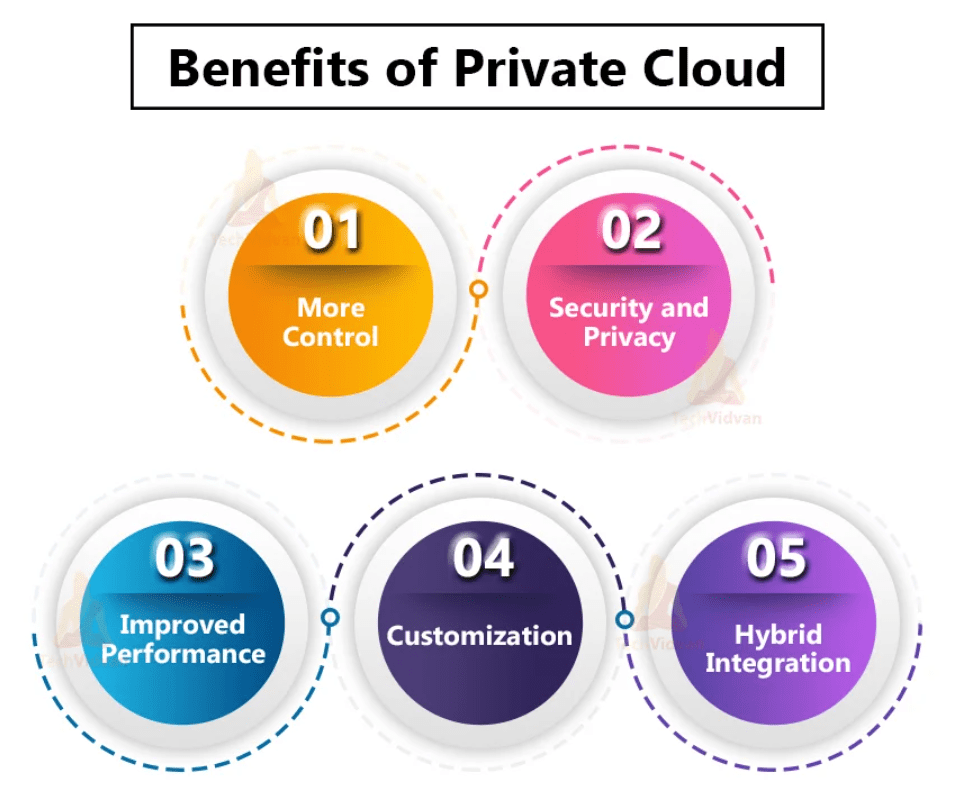
Reason 4: Lower long-term costs
The pay-per-use model of public clouds seems inexpensive initially, but can get exponentially costly at scale. Private clouds require significant upfront investment but have lower operating expenses in the long run for large organizations with predictable, heavy workloads.
While public clouds may appear cost-effective initially, they can become prohibitively expensive as organizations scale their operations. Private clouds, on the other hand, involve a substantial upfront investment but often result in lower long-term operating expenses for large organizations with predictable and heavy workloads. By owning and managing their infrastructure, organizations can optimize costs and avoid the potentially unpredictable pricing structures of public cloud providers.
Reason 5: Tighter integration with legacy systems
Integrating legacy applications and data stores locked into older technologies with public cloud environments can be challenging. Private clouds offer seamless integration with existing IT assets since they reside within the same network on customized infrastructure.
Reason 6: Enhanced capacity and responsiveness
Public clouds have near-infinite capacity, but baseline performance and capacity cannot be dedicated or guaranteed for each customer. Private clouds can be scaled precisely to current needs and provide reliable performance due to isolation from other tenants.
Integrating legacy applications and data stores into public cloud environments can be a complex and challenging endeavor due to compatibility issues and the need to refactor or migrate existing systems. Private clouds, residing within an organization’s network, offer a seamless integration path for legacy IT assets. This proximity and control facilitate smoother integration processes, allowing organizations to leverage their existing technology investments while embracing modern cloud capabilities.
Reason 7: Data sovereignty and legal requirements
Many nations mandate that sensitive data be stored on local servers. Public cloud data centers may be located abroad, leading to compliance issues. Private clouds enable full control over the geographic location of data to meet legal sovereignty requirements.
Public clouds provide vast and scalable resources, but they cannot guarantee dedicated or consistent performance for each customer, especially during peak usage periods. It offer organizations the ability to precisely scale their infrastructure to match their current needs. This scalability, combined with isolation from other tenants, ensures reliable and predictable performance, making private clouds an excellent choice for applications and workloads that demand consistent responsiveness and capacity.
Conclusion:
While the scalability and agility of public clouds will continue driving adoption, private clouds solve critical security, compliance, flexibility, and cost effectiveness needs unmet by public providers. The future will likely involve hybrid models blending the best of private and public cloud capabilities across the enterprise computing landscape. The comeback of private clouds is driven by the realization that one size does not fit all in cloud computing.
Why are businesses adopting private clouds instead of public clouds in your opinion? Share your thoughts with us in the comments section below.

Featured Post
Self-Hosted n8n vs Cloud n8n: Which Option Is Right for Your Automation Needs?
Self-hosted vs cloud n8n is a decision every growing business eventually has...

Faizan Irfan
August 7, 2026
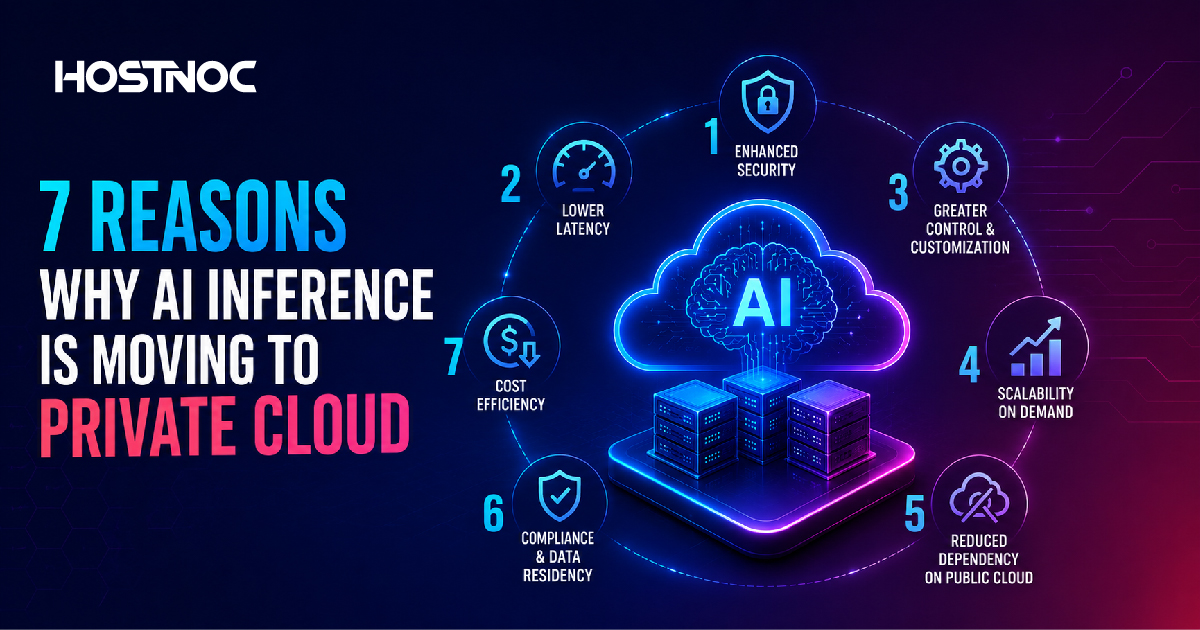
7 Reasons Why AI Inference Is Moving to Private Cloud
Enterprises are moving beyond AI experimentation and into large-scale production deployments, a...

Sarmad Hasan
July 20, 2026
Cloud for Finance: Everything You Need To Know
Key Takeaways Cloud for finance refers to both cloud-based financial systems and...
Sarmad Hasan
July 6, 2026