Blogs
on
Cloud Hosting for Education: Transforming Digital Learning Infrastructure
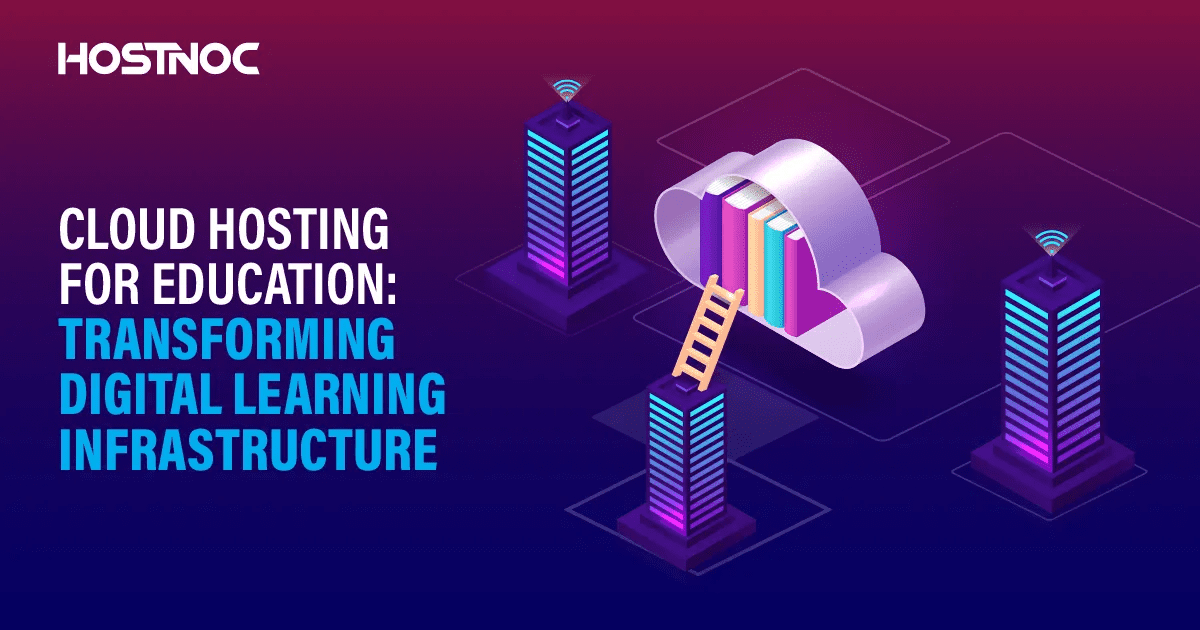
Cloud hosting for education refers to the use of cloud computing infrastructure, such as Infrastructure as a Service (IaaS), Platform as a Service (PaaS), and Software as a Service (SaaS) to deliver educational applications, data storage, and digital learning environments over the internet. Educational institutions, including K–12 schools, colleges, universities, online learning platforms, and EdTech companies, increasingly rely on cloud hosting to support scalable, secure, and cost-effective digital education.
Major cloud service providers such as Amazon Web Services (AWS), Microsoft Azure, Google Cloud Platform (GCP), and IBM Cloud play a central role in powering modern education technology ecosystems.
Cloud hosting for education refers to the use of cloud computing infrastructure, such as Infrastructure as a Service (IaaS), Platform as a Service (PaaS), and Software as a Service (SaaS) to deliver educational applications, data storage, and digital learning environments over the internet. Educational institutions, including K–12 schools, colleges, universities, online learning platforms, and EdTech companies, increasingly rely on cloud hosting to support scalable, secure, and cost-effective digital education.
Major cloud service providers such as Amazon Web Services (AWS), Microsoft Azure, Google Cloud Platform (GCP), and IBM Cloud play a central role in powering modern education technology ecosystems.
Cloud Hosting For Education: Why Does It Matter?
Here are some of the reasons why cloud hosting for education matters for education insitutes.
1. Scalability for Digital Learning
Educational demand fluctuates during:
- Online examinations
- Admissions periods
- Virtual classrooms and MOOCs
Cloud hosting enables elastic scalability, allowing institutions to automatically scale computing resources up or down based on real-time usage without investing in physical servers.
2. Cost Efficiency and Budget Optimization
Traditional on-premises infrastructure requires:
- Hardware procurement
- Maintenance
- Dedicated IT staff
Cloud hosting reduces capital expenditure (CapEx) and shifts costs to a pay-as-you-go operational model (OpEx), making it especially beneficial for public schools and budget-constrained institutions.
Cloud Hosting For Education: Models
Here are some of the most common cloud hosting models.
Infrastructure as a Service (IaaS)
Provides virtualized computing resources such as:
- Virtual machines
- Storage systems
- Networking
Used for hosting Learning Management Systems (LMS) like Moodle or Blackboard on custom infrastructure.
Platform as a Service (PaaS)
Enables developers to build and deploy educational applications without managing underlying infrastructure. Common use cases include:
- Custom student portals
- AI-driven learning analytics platforms
Software as a Service (SaaS)
Delivers ready-to-use applications such as:
- Google Workspace for Education
- Microsoft 365 Education
- Canvas LMS
- Zoom and Microsoft Teams for virtual classrooms
Cloud Hosting For Education: Benefits For Education Institutes
Improved Accessibility and Remote Learning
Cloud hosting supports anytime, anywhere access across devices, enabling:
- Distance learning
- Hybrid education models
- Mobile learning environments
With integrated tools like an expiry tracker, users can efficiently manage deadlines, track important dates, and ensure nothing gets missed in dynamic learning environments.
Enhanced Collaboration
Students and educators can collaborate in real time using:
- Cloud-based document sharing
- Virtual classrooms
- Discussion forums and messaging platforms
High Availability and Disaster Recovery
Cloud platforms offer:
- Built-in redundancy
- Automated backups
- Disaster recovery solutions
This ensures minimal downtime for critical academic systems.
Data Security, Privacy, and Compliance
Security is a top concern in education due to the sensitivity of student data.
Key Compliance Standards
Cloud hosting providers support compliance with regulations such as:
- FERPA (Family Educational Rights and Privacy Act) – United States
- GDPR (General Data Protection Regulation) – European Union
- ISO/IEC 27001
- SOC 2
Security Features
- Data encryption (at rest and in transit)
- Identity and Access Management (IAM)
- Multi-factor authentication (MFA)
- Continuous monitoring and threat detection
Cloud Hosting and Learning Management Systems (LMS)
Cloud-hosted LMS platforms enable:
- Course creation and content delivery
- Student assessments and grading
- Learning analytics and performance tracking
Popular cloud-compatible LMS platforms include:
- Moodle Cloud
- Blackboard Learn SaaS
- Canvas
- Schoology
Cloud Hosting For Education: Emerging Technologies
Artificial Intelligence and Machine Learning
Cloud infrastructure supports AI-powered tools such as:
- Personalized learning paths
- Automated grading
- Intelligent tutoring systems
Big Data and Learning Analytics
Cloud platforms process large volumes of educational data to deliver insights into:
- Student engagement
- Learning outcomes
- Curriculum effectiveness
Virtual Desktop Infrastructure (VDI)
Cloud-based VDI allows students to access specialized software (e.g., CAD and data science tools) on low-cost devices.
Use Cases of Cloud Hosting in Education
- Online universities and MOOCs (e.g., Coursera, edX)
- Virtual classrooms and video conferencing
- Digital libraries and research repositories
- Student Information Systems (SIS)
- Campus management and ERP systems
Challenges and Considerations
While cloud hosting offers many advantages, institutions must consider:
- Internet connectivity limitations
- Data residency requirements
- Vendor lock-in risks
- Change management and staff training
A well-defined cloud adoption strategy is essential for long-term success.
Future of Cloud Hosting in Education
The future of education is deeply tied to the cloud. Trends shaping the sector include:
- Cloud-native EdTech platforms
- AI-driven adaptive learning
- Increased use of edge computing
- Global virtual campuses
As digital education expands, cloud hosting will remain the backbone of scalable, inclusive, and innovative learning environments.
Conclusion
Cloud hosting for education is no longer optional; it is a foundational component of modern learning ecosystems. By enabling scalability, security, accessibility, and innovation, cloud computing empowers educational institutions to meet evolving student needs while maintaining operational efficiency. As cloud technologies continue to advance, their impact on education will only deepen, shaping the future of teaching and learning worldwide.
Did this article help you understand everything you need to know about cloud hosting for education? Share it with us in the comments section below.

Featured Post
Self-Hosted n8n vs Cloud n8n: Which Option Is Right for Your Automation Needs?
Self-hosted vs cloud n8n is a decision every growing business eventually has...

Faizan Irfan
August 7, 2026
7 Reasons Why AI Inference Is Moving to Private Cloud
Enterprises are moving beyond AI experimentation and into large-scale production deployments, a...

Sarmad Hasan
July 20, 2026

Cloud for Finance: Everything You Need To Know
Key Takeaways Cloud for finance refers to both cloud-based financial systems and...
Sarmad Hasan
July 6, 2026