Blogs
Cloud for Media: Everything You Need To Know
February 27, 2026
Snowflake and OpenAI Seal $200M Strategic Alliance to Transform AI For Enterprise Data Platforms
March 4, 2026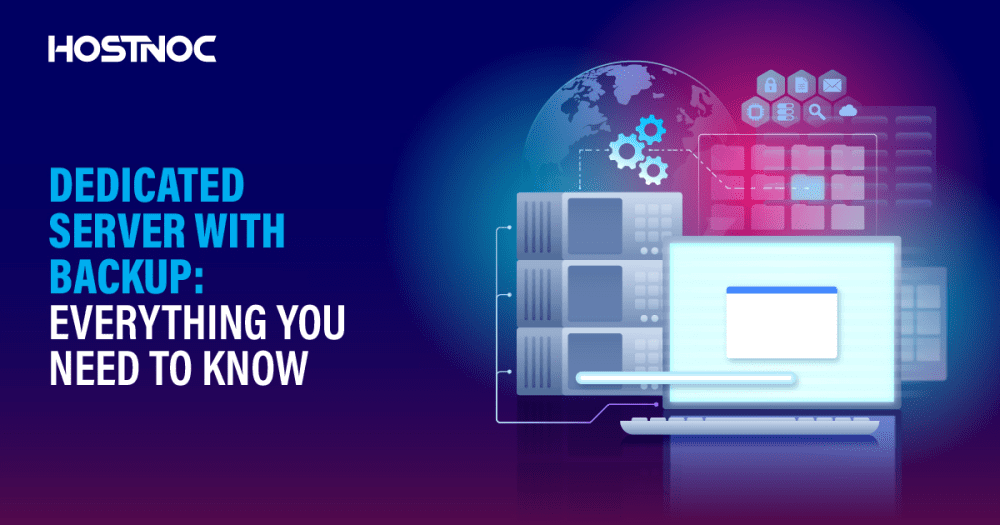
A Dedicated Server with backup is a high-performance hosting solution that combines exclusive physical server resources with robust data protection mechanisms. Unlike shared hosting or virtual private servers (VPS), a dedicated server allocates entire hardware resources—CPU, RAM, storage, and network interfaces—to a single tenant. When integrated with enterprise-grade backup systems, it provides unmatched reliability, security, and disaster recovery capabilities for mission-critical workloads.
Organizations in industries such as finance, healthcare, SaaS, e-commerce, gaming, media streaming, and government rely on dedicated servers with backups to ensure data integrity, regulatory compliance, and business continuity.
Table of Contents
- Why Do Businesses Need A Dedicated Server With Backup?
- The Role of Backup in Dedicated Servers
- Types of Backup for Dedicated Servers
- Backup Methods and Strategies
- Popular Backup Software for Dedicated Servers
- Backup Frequency and Retention Policies
- Security Considerations for Dedicated Server Backups
- Dedicated Server with Backup vs Cloud Backup Only
- Use Cases for Dedicated Server With Backup
- Choosing the Right Dedicated Server with Backup
- Best Practices
- Conclusion
Why Do Businesses Need A Dedicated Server With Backup?
Businesses need a dedicated server with backup because it ensures high performance, strong security and reliable data protection essential for smooth operations. A dedicated server provides exclusive access to resources, preventing slowdowns caused by shared environments and allowing full control over system configuration. It also enhances security by isolating business data and supporting compliance with industry standards.
Most importantly, integrated backup solutions protect critical data from hardware failures, cyberattacks, human errors, and unexpected disasters, ensuring quick recovery and minimal downtime. Together, a dedicated server with backup supports business continuity, scalability, and long-term cost efficiency by reducing the risks of data loss and operational disruptions.
The Role of Backup in Dedicated Servers
A backup is a secure copy of data stored separately from the primary system. On dedicated servers, backups are essential for protection against:
- Hardware failure
- Ransomware attacks (LockBit, Conti, BlackCat)
- Accidental deletion
- Software corruption
- Natural disasters
- Insider threats
A dedicated server without a backup strategy represents a single point of failure, regardless of hardware redundancy.
Types of Backup for Dedicated Servers
1. On-Server Backups (Local Backup)
- Stored on secondary disks or RAID arrays
- Fast recovery times
- Vulnerable to total server failure
Technologies used:
- RAID 1, RAID 10
- LVM snapshots
- ZFS snapshots
2. Off-Server Backups (Remote Backup)
- Stored on separate backup servers or storage clusters
- Essential for disaster recovery
Common storage targets:
- Backup dedicated servers
- NAS (Synology, QNAP)
- Object storage (S3-compatible)
3. Cloud Backup Integration
Dedicated servers often integrate with cloud storage providers:
- Amazon S3 / Glacier
- Google Cloud Storage
- Microsoft Azure Blob Storage
- Backblaze B2
- Wasabi Hot Cloud Storage
These solutions offer geo-redundancy, immutability, and scalability.
Backup Methods and Strategies
Full Backup
- Complete copy of all data
- High storage usage
- Typically performed weekly or monthly
Incremental Backup
- Captures changes since the last backup
- Efficient storage usage
- Faster execution
Differential Backup
- Captures changes since the last full backup
- Balanced recovery time and storage usage
Snapshot-Based Backup
- Uses filesystem or volume snapshots
- Near-instant creation
- Common with ZFS, Btrfs, LVM
Popular Backup Software for Dedicated Servers
Open-Source Solutions
- BorgBackup
- Restic
- Duplicity
- Amanda
Commercial & Enterprise Tools
- Veeam Backup & Replication
- Acronis Cyber Protect
- Commvault
- Veritas NetBackup
- Nakivo
Control Panel Integrated Backups
- cPanel & WHM (JetBackup, cPanel Backup)
- Plesk Backup Manager
- DirectAdmin Backup System
Backup Frequency and Retention Policies
A well-designed backup policy defines:
- RPO (Recovery Point Objective) – maximum data loss tolerance
- RTO (Recovery Time Objective) – acceptable downtime duration
Example Retention Model
- Hourly backups: last 24 hours
- Daily backups: last 7 days
- Weekly backups: last 4 weeks
- Monthly backups: last 12 months
Security Considerations for Dedicated Server Backups
Encryption
- AES-256 encryption at rest
- TLS 1.2 / TLS 1.3 in transit
- GPG or OpenSSL-based key management
Access Control
- SSH key authentication
- Role-based access control (RBAC)
- Immutable backups (WORM storage)
Compliance Standards
- GDPR (EU)
- HIPAA (Healthcare)
- PCI DSS (Payment processing)
- ISO/IEC 27001
Dedicated Server with Backup vs Cloud Backup Only
| Feature | Dedicated Server with Backup | Cloud-Only Backup |
| Performance | Bare-metal speed | Variable |
| Customization | Full control | Limited |
| Data sovereignty | Yes | Depends on region |
| Compliance | Easier to enforce | Provider-dependent |
| Cost predictability | High | Usage-based |
Use Cases for Dedicated Server With Backup
E-Commerce Platforms
- Magento, WooCommerce, Shopify Plus (custom backend)
- Protects customer data, orders, and payment records
SaaS Applications
- Node.js, Laravel, Django, Ruby on Rails
- Ensures uptime and rapid rollback
Databases
- MySQL, PostgreSQL, MongoDB, Redis
- Point-in-time recovery (PITR)
Game Servers
- Minecraft, ARK, Rust
- Protects player progress and world data
Choosing the Right Dedicated Server with Backup
Key evaluation criteria:
- Data center location (Tier III / Tier IV)
- Backup automation
- Off-site storage availability
- Backup restore testing
- Support SLA (24/7, managed services)
- Scalability and upgrade paths
Best Practices
- Follow the 3-2-1 backup rule (3 copies, 2 media, 1 off-site)
- Test backups regularly
- Monitor backup logs and alerts
- Use immutable backups for ransomware defense
- Separate backup credentials from production systems
Conclusion
A Dedicated Server with Backup is not merely a hosting option—it is a strategic infrastructure investment. By combining exclusive hardware performance with secure, automated, and compliant backup systems, organizations achieve high availability, resilience, and long-term data protection.
In an era of increasing cyber threats, regulatory scrutiny, and data dependency, a dedicated server backed by a comprehensive backup strategy is essential for sustainable digital operations.

Featured Post
Dedicated Server for Big Data Analytics: Architecture, Performance, and Deployment at Scale
Big data analytics workloads place extreme and non-negotiable demands on infrastructure. High-throughput ingestion, parallel computation, memory-intensive processing, and sustained disk I/O are not optional features—they are […]

Sarmad Hasan
March 21, 2026
Dedicated Server with Root Access: Everything You Need to Know
A dedicated server with root access is a physical server exclusively allocated to a single user or organization, providing complete administrative control over the operating system, […]
Sarmad Hasan
March 16, 2026
Dedicated Server For Government: Everything You Need to Know
In an era where digital transformation defines national competitiveness, governments around the world are investing heavily in resilient, secure, and scalable infrastructure. Among all infrastructure choices, […]
Sarmad Hasan
March 11, 2026