Blogs
on
Dedicated Server for Small Business: Full Breakdown in 2026
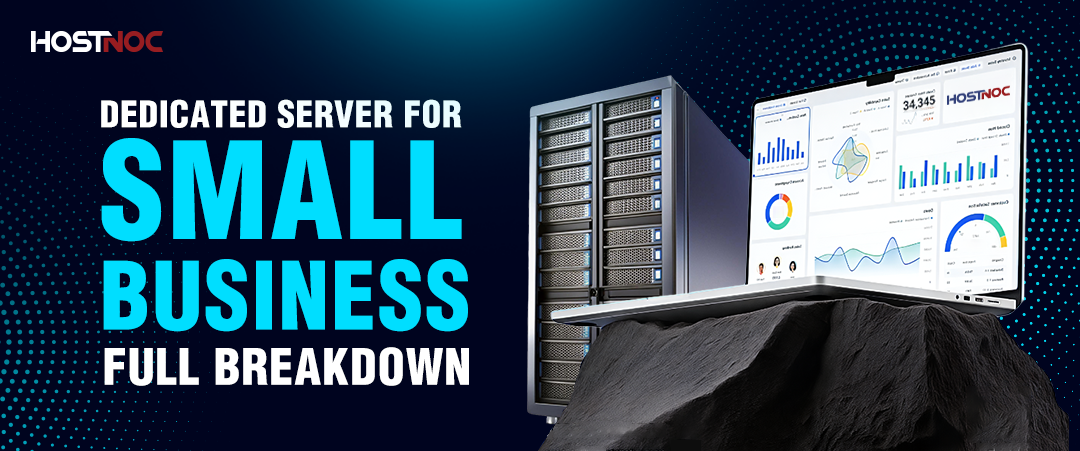
Dedicated server for small business: The dedicated server provides unique access to the entire CPU, RAM, storage, and bandwidth without sharing any resources among multiple users. It provides stable performance, high-level security, and complete configuration options for small business clients who are running e-commerce, CRM, or SaaS apps, etc. Managed dedicated hosting services offered by hosting companies like HOSTNOC take away all the hassle for you.
Dedicated server for small business: The dedicated server provides unique access to the entire CPU, RAM, storage, and bandwidth without sharing any resources among multiple users. It provides stable performance, high-level security, and complete configuration options for small business clients who are running e-commerce, CRM, or SaaS apps, etc. Managed dedicated hosting services offered by hosting companies like HOSTNOC take away all the hassle for you.
Key Takeaways:
- A dedicated server reserves all hardware resources for a single business, avoiding any kind of performance competition from other users.
- Dedicated hosting suits best for small businesses that use WooCommerce, Magento, ERP software, or any regulatory requirements for their data environment.
- In 2026, NVMe storage (3,500+ MB/s reading/writing speed) and DDR5 memory are required standards for business-critical dedicated servers.
- Managed dedicated hosting services are ideal for small business clients without an IT department.
- Monthly charges for a dedicated server start from $80 to $600+ based on server configuration, management, and other factors.
- We offer bare-metal dedicated servers with 99.99% SLA guaranteed uptime and 24/7 NOC monitoring service.
What Is a Dedicated Server?
A dedicated server is an individual physical server used exclusively by a single user or client. As opposed to shared servers, which allow various websites hosted on one server to share hardware and software, a dedicated server guarantees exclusive access to computing capacity, memory, and storage space.
In this sense, if a dedicated server hosts an e-commerce business’s website, there is no competition for resources between other websites. In turn, it leads to fast loading speed and stable uptime.
The most common use cases of dedicated servers are businesses that:
- Process any personal information of their customers
- Work with resource-intensive sites or applications
- Need to install particular software solutions or set up particular configurations
- Require guaranteed performance 24/7
Process any personal information of their customers. Work with resource-intensive sites or applications.
This overview serves as the best dedicated server guide for understanding when dedicated hosting becomes the right choice for business-critical workloads.
Why Small Businesses Choose Dedicated Servers
Small businesses are increasingly favoring dedicated hosting for the following four factors: performance, security, customizability, and scalability. All of which have implications directly related to the bottom line of business operations.
1. Performance and Speed
A dedicated server ensures constant performance since all resources belong solely to one customer. It is important for small businesses working with demanding programs such as:
- Magento or WooCommerce online store
- ERP (Enterprise Resource Planning) program
- Custom business dashboard
- Video streaming website
Slower websites equal lower profits. According to Google’s research, 20% fewer conversions happen with each additional second of loading time. Small businesses can ensure their customers’ expectations are met using a dedicated server, which means no other website will slow down yours.
For instance, in 2026, small businesses will be implementing local AI services, big data databases, and analytics services. The constant allocation of CPU power cannot be provided in a shared environment.
2. Security and Compliance
Small enterprises encounter major issues related to security threats and cyber attacks. With the use of a dedicated server, the isolation of sensitive information is guaranteed on a hardware basis, as nobody else uses this particular computer.
The benefits of using a dedicated server become particularly noticeable in case you deal with information that must be processed in accordance with the requirements of such standards as PCI DSS, HIPAA, and GDPR. A provider like HOSTNOC offers comprehensive DDoS protection services and compliance-friendly infrastructure.
For businesses in healthcare, explore how a dedicated server for healthcare addresses HIPAA-specific compliance requirements in detail.
3. Customization and Control
With a dedicated server, a small business has full administrative access (root or administrator rights). This allows the company to:
- Install custom software or scripts
- Optimize databases and caching layers
- Set up security settings on the server side
- Select the operating system, such as Linux, Windows Server, Ubuntu, and CentOS
These controls cannot be realized when using shared hosting, as the settings apply to all users on the same platform simultaneously.
4. Scalability
Modern dedicated servers allow for easy hardware upgrades. There are plenty of hosting solutions that will let you easily upgrade your RAM, NVMe SSDs, and CPUs on the fly.
Dedicated servers can be customized in order to allow for scalable resources as small businesses evolve from 5 people to 50 people.
Dedicated Server vs. VPS vs. Cloud Hosting
Small business owners often compare dedicated, VPS, and cloud hosting before making a decision. The right choice depends on workload type, compliance requirements, and growth trajectory.
| Feature | Dedicated Server | VPS Hosting | Cloud Hosting |
| Hardware | Physical, single tenant | Virtual, shared hardware | Virtual, distributed |
| Performance | Highest, fully consistent | Moderate, variable | Variable, scalable |
| Control | Full root access | Partial root access | Depends on the provider |
| Security | Maximum hardware isolation | Shared physical risk | Depends on cloud setup |
| Cost | $80 to $600+/month | $20 to $175/month | Pay-as-you-go |
| Scalability | Manual hardware upgrades | Easy vertical scaling | Auto-scaling |
| Best For | High-traffic, compliance, performance | Moderate workloads, budget constraints | Flexibility, unpredictable traffic |
Choose a dedicated server if your business needs maximum performance, security isolation, and configuration control.
Choose VPS if traffic is moderate and budget is a primary constraint. Read the dedicated vs VPS hosting comparison for a detailed breakdown of which workloads suit each option.
Choose cloud hosting if you want auto-scaling and highly variable traffic patterns.
Key Features to Look for in a Dedicated Server for Small Business
When selecting a dedicated server for small business, evaluate these 6 factors carefully.
1. Processor (CPU)
Modern servers use Intel Xeon or AMD EPYC processors. For small businesses, a quad-core or hexa-core CPU handles most standard workloads. For high-performance applications like AI tools, analytics, or large databases, multi-core setups with clock speeds above 3.0 GHz deliver the required throughput.
2. RAM
The quantity of memory determines how many processes can be handled simultaneously by your server. You can use a minimum of 8-16 GB RAM for basic websites that are just starting their own online shop. E-commerce stores or software-as-a-service (SaaS) solutions would require 32-64 GB RAM. By 2026, you can expect to use DDR5 RAM in your important business processes, offering double the bandwidth of DDR4. These performance requirements are especially important when selecting a dedicated server for saas startups.
3. Storage
High-speed NVMe SSD supports data read/write rates of over 3,500 MB/s and is currently the default option for mission-critical operations. Hybrid solutions combining NVMe SSD for the OS and software layers and HDD for backup purposes are available. This setup also becomes important when evaluating SSD vs. NVMe dedicated server performance and storage requirements.
4. Bandwidth and Uptime
Good hosting services provide 1 Gbps port connections and uptime SLA guarantees of 99.99%. Dedicated server hosting also offers unmetered bandwidth packages and an uptime SLA of 99.99%, making it an ideal choice for businesses looking for a dedicated server with unlimited bandwidth.
5. Security Tools
Five must-have security features include protection against distributed denial-of-service attacks, a hardware firewall, automated backups on a daily basis, 2FA support, and Tier III or IV data centers. The five security features above constitute the minimum required level of security for a dedicated server.
6. Managed vs. Unmanaged Options
Managed dedicated server hosting: All server maintenance and security responsibilities are carried out by the hosting service provider. Managed hosting suits best small firms that lack a dedicated IT department.
Unmanaged dedicated server hosting: The business is responsible for the whole process from server configuration to cybersecurity. The solution is good for companies whose IT specialists know how to deal with the server and have root access to it.
Most small businesses opt for managed hosting. Supporting a production server and performing core business processes at the same time takes too much effort, which is why understanding managed vs unmanaged server hosting is important before making a decision.
2026 Hardware Standards for Small Business Dedicated Servers
Since 2023, the minimum hardware requirement for dedicated servers has changed. As of 2026, 3 hardware components qualify a dedicated server for business requirements.
NVMe storage offers more than 3,500 MB/s read/write throughput versus 500 MB/s in old SATA SSD storage devices. The speed difference translates to faster queries, application load times, and faster backups for critical applications. SATA SSD storage and hard disk drives are not the norm anymore.
DDR5 RAM offers almost twice the memory bandwidth compared to DDR4 RAM. Small businesses running multiple database operations, API calls, and websites benefit from this increased bandwidth for improved performance.
Small businesses implementing modern applications like AI inference and microservices need servers that come with multi-core CPUs and PCIe Gen 5 support for fast processing.
Cost of Dedicated Servers for Small Businesses
The cost of a dedicated server for small business depends on hardware specifications, management level, geographic location, and included features.
| Server Type | Typical Monthly Cost | Suitable For |
| Entry-Level Dedicated | $80 to $120/month | Small websites, local businesses, basic databases |
| Mid-Range Dedicated | $150 to $250/month | E-commerce stores, CRM, ERP systems |
| High-Performance Dedicated | $300 to $600+/month | SaaS apps, media hosting, analytics platforms |
| Managed Add-on | +$50 to $120/month | Any tier requiring provider-side maintenance |
Some providers offer annual contract discounts of 10 to 20% compared to month-to-month pricing. Always evaluate the total cost of ownership (TCO), including licensing fees for Windows Server, cPanel, or Plesk control panels, which add $15 to $50/month to base server costs.
The ROI calculation for dedicated hosting is straightforward: consistent uptime and performance for an e-commerce store generating $10,000/month in revenue means that even 1 hour of downtime at peak traffic can cost more than a full month of dedicated server fees.
Understanding dedicated server cost and accurately estimating server cost for small business requirements can help organizations make smarter long-term infrastructure investments.
Best Dedicated Server Providers for Small Businesses
Here are the server providers that offer reliable dedicated servers for small businesses.
| Provider | Key Strength | Best For |
| HOSTNOC | Cost-effective bare-metal with 24/7 NOC monitoring | SMBs need reliability and affordability |
| Liquid Web | Premium managed servers, 24/7 expert support | Businesses requiring fully managed, high-uptime hosting |
| HostGator | Affordable entry-level, cPanel management | Budget-conscious small businesses |
| InMotion Hosting | U.S.-based, SSD storage, strong support | American businesses are prioritizing local data centers |
| OVHcloud | Global data centers, enterprise infrastructure | Businesses with international audiences |
| A2 Hosting | Speed-optimized turbo servers | Developer-focused teams and performance-priority workloads |
When choosing a provider, 3 factors matter most: data center location (closer servers reduce latency for your primary audience), support availability (24/7 vs. business-hours-only), and contract flexibility (monthly vs. annual commitments).
How to Set Up a Dedicated Server for Small Business
Here is a 6-step process to configure a dedicated server for small business operations.
- Select the Operating System. Common options are Ubuntu 22.04 LTS, Debian, CentOS Stream, or Windows Server 2022. Linux distributions are preferred for web workloads due to lower licensing costs and broader software compatibility.
- Configure the Control Panel. Install management software like cPanel, Plesk, or Webmin for simplified administration. cPanel is the most widely used option for businesses managing multiple websites or email accounts.
- Secure the Server. Configure firewalls, implement SSH key authentication (disabling password login), enable automatic security updates, and schedule regular encrypted backups to an external location.
- Install Applications. Deploy your CMS (WordPress, Drupal), database engine (MySQL, PostgreSQL), or custom application stack. Use configuration management tools like Ansible or Docker for reproducible deployments.
- Monitor Performance. Use tools such as Nagios, Zabbix, or Datadog to track uptime, CPU utilization, memory pressure, and network throughput. Set alert thresholds before problems affect end users.
- Automate Backups. Schedule daily or weekly encrypted backups to an external server or cloud storage such as AWS S3 or Backblaze B2. Test restoration procedures quarterly to confirm backup integrity.
Advantages and Disadvantages of a Dedicated Server for Small Business
Advantages
- Exclusive resources deliver consistent performance regardless of external traffic conditions.
- Hardware-level security isolation eliminates shared-tenant risk entirely
- Full root access enables any configuration, software install, or optimization the business requires
- Reliable uptime with 99.99% SLA-backed guarantees from enterprise-grade data centers
- Long-term cost efficiency as workloads grow and shared hosting performance degrades
Disadvantages
- Higher base cost compared to shared or VPS hosting, starting at $80/month for entry-level configurations
- Technical knowledge is required for unmanaged plans; managed plans remove this requirement.
- Physical hardware limits mean vertical scaling requires provider coordination, unlike cloud auto-scaling
For businesses weighing the tradeoffs between dedicated and VPS infrastructure, the What is VPS hosting guide explains the full spectrum of virtualized hosting options and their appropriate use cases.
Who Actually Needs a Dedicated Server for Small Business?
Not every small business requires dedicated infrastructure. The right business profile for a dedicated server for small business includes 5 characteristics:
- Traffic volume exceeding 10,000 monthly visitors, where shared hosting throttles performance
- Regulated data environments requiring HIPAA, PCI DSS, or GDPR compliance configurations
- E-commerce stores where page load speed directly affects conversion rates and revenue
- Custom application stacks that require specific OS versions, libraries, or security configurations are unavailable on shared platforms.
- Businesses with SLA obligations to their own customers, where uptime guarantees are contractually required
Small businesses without these characteristics often start with VPS hosting and migrate to dedicated infrastructure as workloads grow. HOSTNOC supports both paths with consistent hardware and support quality across both product lines.
Conclusion
A dedicated server for small business becomes the cornerstone of reliable and secure operations. Regardless of whether your small business runs an e-commerce site, software-as-a-service application, database system, or health or finance industry solution, a dedicated server can provide features that are simply not available in a shared environment or virtual private server.
In 2026, when small businesses will start using local artificial intelligence solutions, process large amounts of data, and fulfill service level agreements with their customers, the differences between the two hosting environments will have become even more evident. Modern NVMe drives, DDR5 memory, and multicore processors are the baseline of today, and managed services eliminate the necessity of managing such infrastructure.
The proper choice for the vast majority of small businesses in 2026 would be a managed dedicated server that supports a 24/7 network operations center, has 99.99% uptime service level agreement, and uses hardware for modern workloads.
Frequently Asked Questions About Dedicated Server for Small Business

What is a dedicated server for small business?
A dedicated server for small business means the actual hardware server, which is reserved by one company alone. The server is reserved only for one company; therefore, it provides consistent performance and complete security and configurability.
How much does a dedicated server cost for a small business?
Entry-level dedicated servers cost $80 to $120/month. Mid-range configurations run $150 to $250/month. High-performance servers for SaaS or analytics workloads start at $300/month. Managed add-ons add $50 to $120/month to any tier.
Which is better, a dedicated server or a VPS, for a small business?
The dedicated server is superior to VPS in 3 aspects: performance consistency, security isolation, and configuration control. While VPS serves well for moderate website traffic and low budgets, the dedicated server should be chosen when performance stability and compliance policies are critical.
What is managed dedicated hosting?
Managed dedicated hosting refers to the ability of the host to update the operating system and other software, perform security updates, monitor server performance and take corrective actions when needed, and the customer gets full control and functionality of the server while not having to maintain the infrastructure.
What hardware do I need in a dedicated server in 2026?
In 2026, business-critical dedicated servers run NVMe SSD storage (3,500+ MB/s), DDR5 RAM, and multi-core Intel Xeon or AMD EPYC processors. These specifications handle modern workloads, including local AI tools, high-volume databases, and containerized applications.
Is it possible to host many websites on my dedicated server as a small company?
Indeed, there is nothing difficult in hosting multiple websites from the same dedicated server. Software such as cPanel or Plesk can help with the management of websites. Allocation will be done depending on the computing power and RAM of the server compared to the total traffic of all my websites.
What is the difference between dedicated and shared hosting?
Dedicated hosting separates my business from others physically by using the same server to host many companies at once, which creates competition over computing power and RAM. A dedicated server uses all available resources to satisfy only my business needs.
How do I choose the best dedicated server provider for my small business?
Evaluate 4 criteria: data center location relative to your primary audience, SLA uptime guarantees (99.99% minimum), managed vs. unmanaged support options, and hardware specifications matching your application requirements. HOSTNOC’s dedicated server hosting plans cover all 4 criteria for small business workloads.

Featured Post
10 Things That Is Keeping IT Leaders Up at Night
The role of the Chief Information Officer (CIO) has evolved from operational...

Sarmad Hasan
July 24, 2026
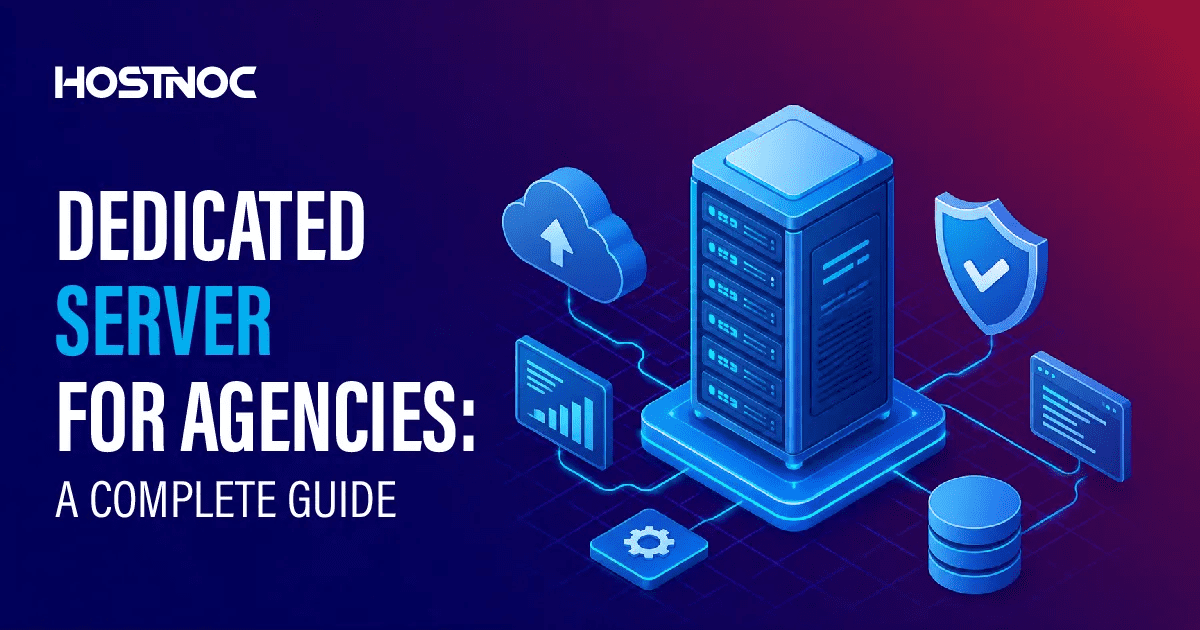
Dedicated Server for Agencies: A Complete Guide
Agencies today manage multiple client websites, applications, and...
Sarmad Hasan
July 13, 2026
Does Borderlands 3 Have Dedicated Servers?
No. Borderlands 3 does not use dedicated servers. Multi player gaming sessions...

saad ullah
July 8, 2026