Blogs
Key Takeaways:
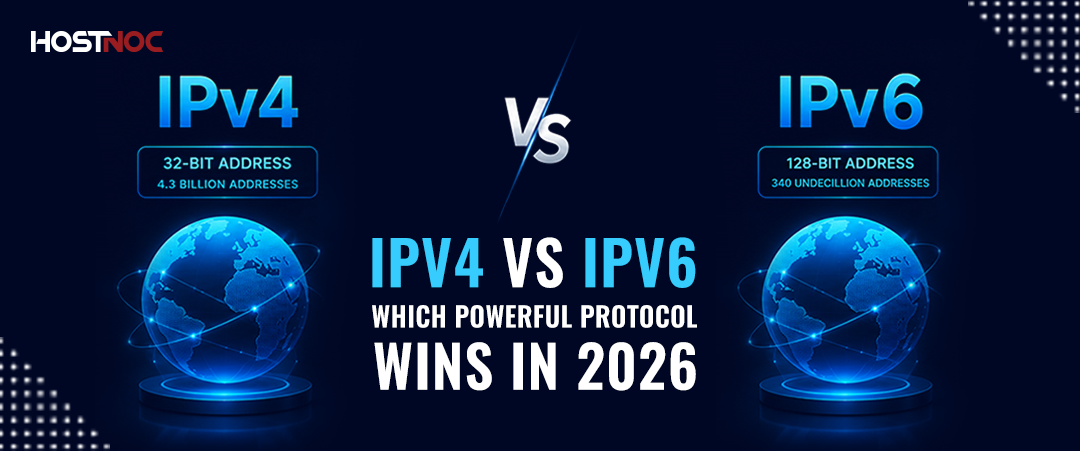
- IPv4 vs IPv6 represents the evolution of internet addressing from a 32-bit system to a vastly larger 128-bit architecture.
- The difference between IPv4 and IPv6 is primarily address capacity with IPv6 supporting approximately 340 undecillion unique addresses compared to IPv4’s 4.3 billion.
- The IPv4 and IPv6 difference extends beyond addressing and includes improved routing efficiency, simplified packet processing, better mobility support and enhanced security capabilities.
The internet relies on a communication framework known as the Internet Protocol (IP), which enables devices to identify and communicate with each other across networks. Every smartphone, computer, server, website and IoT device connected to the internet requires a unique IP address. For decades, IPv4 served as the foundation of internet communication. However, the rapid growth of internet-connected devices led to the development of IPv6, a next-generation protocol designed to overcome the limitations of IPv4.
In this guide, we’ll explore IPv4 vs IPv6, examine their key differences and explain why IPv6 is increasingly becoming the future of internet connectivity.
What Is IPv4?
Internet Protocol Version 4 (IPv4) is the fourth version of the Internet Protocol and remains the most widely deployed networking protocol worldwide. Introduced in the early days of the internet, IPv4 uses a 32-bit addressing system, allowing approximately 4.3 billion unique IP addresses.
An IPv4 address consists of four decimal numbers separated by periods such as:
192.168.1.1
At the time of its creation, 4.3 billion addresses seemed more than sufficient. However, the explosion of smartphones, laptops, cloud services, data centers, smart home devices and Internet of Things (IoT) technologies quickly exhausted the available IPv4 address space.
To address this shortage, techniques like Network Address Translation (NAT) were introduced, allowing multiple devices to share a single public IP address.
What Is IPv6?
Internet Protocol Version 6 (IPv6) was developed by the Internet Engineering Task Force (IETF) as the successor to IPv4. IPv6 uses a 128-bit address format, creating an enormous address space capable of supporting approximately 340 undecillion unique addresses.
A typical IPv6 address looks like this:
2001:0db8:85a3:0000:0000:8a2e:0370:7334
Unlike IPv4, IPv6 addresses use hexadecimal notation and are separated by colons.
The primary goal of IPv6 is to ensure the internet can continue growing without running out of available addresses while improving performance, efficiency and security.
IPv4 vs IPv6: Key Differences
When comparing IPv4 vs IPv6, several significant differences become apparent.
1. Address Length
The most obvious distinction is address size.
- IPv4 uses 32-bit addresses.
- IPv6 uses 128-bit addresses.
This dramatic increase enables IPv6 to support virtually unlimited internet-connected devices.
2. Address Representation
IPv4 addresses use decimal numbers separated by periods:
203.0.113.25
IPv6 addresses use hexadecimal values separated by colons:
2001:db8::1
This format allows IPv6 to accommodate its much larger address space efficiently.
3. Address Availability
One of the biggest reasons for the transition from IPv4 to IPv6 is address exhaustion. IPv4 supports roughly 4.3 billion addresses, many of which are reserved or no longer available. In contrast, IPv6 provides enough addresses for every device on Earth to have billions of unique IP addresses.
4. Network Address Translation (NAT)
Due to limited address availability, IPv4 often relies on NAT, which allows multiple devices to share a single public IP address. IPv6 largely eliminates the need for NAT because every device can receive its own globally unique address. This simplifies network architecture and improves peer-to-peer communication.
5. Security Features
Another important IPv4 and IPv6 difference is security. IPv6 was designed with IPsec support in mind, providing built-in mechanisms for authentication, data integrity and encryption. While IPsec can also be used with IPv4, it is not implemented as consistently. This makes IPv6 better suited for modern cybersecurity requirements.
6. Routing Efficiency
IPv6 uses simplified packet headers that enable routers to process traffic more efficiently.
Improved routing efficiency can lead to:
- Faster packet processing
- Reduced network congestion
- Better scalability
- Lower operational overhead
As internet traffic continues to increase globally, these efficiencies become increasingly valuable.
7. Auto Configuration
IPv6 supports Stateless Address Auto Configuration (SLAAC), allowing devices to configure themselves automatically when joining a network. IPv4 typically relies on Dynamic Host Configuration Protocol (DHCP) servers to assign addresses. This automation simplifies network administration and deployment.
IP Version 6 vs IP Version 4: Why IPv6 Was Needed?
Understanding IP Version 6 vs IP Version 4 requires looking at how the Internet evolved.
When IPv4 was introduced, few people anticipated the rise of:
- Smartphones
- Cloud computing
- Smart TVs
- IoT devices
- Wearable technology
- Connected vehicles
- Edge computing
Today, billions of devices require internet access. IPv6 was created to support this unprecedented growth while addressing the limitations of IPv4 infrastructure. Without IPv6, the Internet would struggle to accommodate future expansion.
Difference Between IP Version 4 and IP Version 6
The difference between IP Version 4 and IP Version 6 can be summarized across several categories:
| Feature | IPv4 | IPv6 |
| Address Size | 32-bit | 128-bit |
| Address Format | Decimal | Hexadecimal |
| Maximum Addresses | 4.3 Billion | 340 Undecillion |
| NAT Requirement | Common | Rarely Needed |
| Auto Configuration | DHCP | SLAAC |
| Security | Optional IPsec | Native IPsec Support |
| Header Complexity | More Complex | Simplified |
| Multicast Support | Limited | Improved |
These enhancements make IPv6 more scalable and future-ready.
How are IPv4 addresses different from IPv6 Addresses?
You might be wondering how IPv4 addresses are different from IPv6 addresses.
The answer extends beyond appearance.
IPv4 addresses are shorter and easier to read but offer a limited address pool. IPv6 addresses are longer and more complex but provide vastly greater scalability.
For example:
IPv4:
172.16.254.1
IPv6:
2001:db8:3333:4444:5555:6666:7777:8888
While IPv6 addresses may seem intimidating initially, modern networking tools handle most configuration automatically.
IP4 vs IP6: Which One Is Better?
The debate between IP4 vs IP6 generally favors IPv6 from a technical standpoint.
IPv6 offers:
- Massive address availability
- Improved routing
- Better scalability
- Enhanced security
- Reduced dependency on NAT
- Greater support for IoT ecosystems
However, IPv4 remains essential because much of the world’s internet infrastructure still depends on it. As a result, many organizations use dual-stack networking, enabling both IPv4 and IPv6 to operate simultaneously.
Conclusion
The comparison of IPv4 vs IPv6 highlights the evolution of internet networking. While IPv4 laid the foundation for the modern internet, its limited address space and aging architecture created the need for a more scalable solution. IPv6 addresses these challenges through a vastly larger address pool, improved security, simplified routing and enhanced network efficiency. As more devices, applications and services come online, IPv6 will play a critical role in ensuring seamless connectivity for decades to come.
Frequently Asked Questions About IPv4 vs IPv6

What is the difference between IPv4 and IPv6?
The primary difference between IPv4 and IPv6 is their address size. IPv4 uses 32-bit addresses and supports approximately 4.3 billion unique IP addresses, while IPv6 uses 128-bit addresses, allowing for an almost unlimited number of addresses. IPv6 also offers improved security, better routing efficiency and simplified network management.
Why is IPv6 replacing IPv4?
IPv6 was introduced because the world has nearly exhausted the available IPv4 address space. With billions of internet-connected devices, including smartphones, servers, and IoT devices, IPv6 provides the scalability needed to support future internet growth while improving network performance and efficiency.
How are IPv4 addresses different than IPv6 addresses?
IPv4 addresses use four decimal numbers separated by periods, such as 192.168.1.1. In contrast, IPv6 addresses use eight groups of hexadecimal characters separated by colons, such as 2001:db8::1. This format enables IPv6 to accommodate a significantly larger address space.
Can IPv4 and IPv6 work together on the same network?
Yes, IPv4 and IPv6 can operate simultaneously using a dual-stack configuration. This allows devices and networks to communicate using either protocol, making the transition from IPv4 to IPv6 smoother without disrupting existing internet services.
Which is better: IPv4 or IPv6?
When comparing IPv4 vs IPv6, IPv6 is generally considered the better option due to its larger address pool, enhanced security features, reduced reliance on Network Address Translation (NAT), and improved support for modern technologies such as cloud computing and the Internet of Things (IoT). However, IPv4 remains widely used because of its established infrastructure and compatibility.

Featured Post
Bare Metal vs Cloud Computing: A Comprehensive Comparison
Key Takeaways Bare metal servers deliver maximum performance, full hardware control, and...

Sarmad Hasan
July 8, 2026
Managed vs. Unmanaged VPS: A Total Cost of Ownership (TCO) Breakdown
Choosing between managed and unmanaged VPS hosting is not just a technical...
Sarmad Hasan
July 3, 2026
Windows VPS Hosting vs Linux VPS Hosting: A Detailed Comparison
Key Takeaways VPS hosting provides dedicated resources and full server control, offering...
Sarmad Hasan
June 26, 2026