Blogs
Key Takeaways
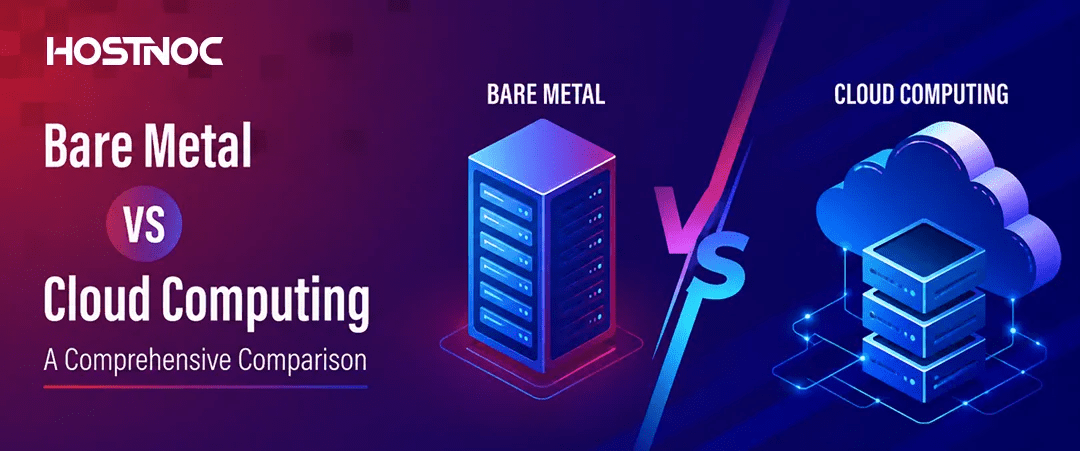
- Bare metal servers deliver maximum performance, full hardware control, and strong isolation—ideal for predictable, resource-intensive workloads.
- Cloud computing (virtual machines) offers unmatched scalability, flexibility, and pay-as-you-go pricing—perfect for dynamic and fast-growing applications.
- Performance vs Flexibility is the core trade-off: bare metal excels in raw power, while cloud excels in adaptability.
- Cost models differ: bare metal often requires higher upfront or committed costs; cloud minimizes initial investment but can become expensive at scale.
- Security approaches vary: bare metal relies on physical isolation, while cloud depends on shared infrastructure with provider-managed safeguards.
- Operational complexity is higher with bare metal and lower with cloud due to automation and managed services.
Businesses today face a critical infrastructure decision: choosing between bare metal servers and cloud computing. The wrong choice can lead to wasted resources, poor performance, or unnecessary costs.
Imagine running a high-performance application on shared cloud infrastructure and experiencing inconsistent speeds due to noisy neighbors. Or, on the flip side, investing heavily in dedicated hardware only to find your traffic fluctuates and your expensive servers sit underutilized.
Understanding the fundamental differences between bare metal and cloud computing helps you make an informed decision, ensuring your infrastructure aligns perfectly with your performance, scalability, and budget needs.
What is Bare Metal?
Bare metal servers are physical, single-tenant machines dedicated entirely to one user. There is no virtualization layer, meaning applications run directly on the hardware.
Key Characteristics:
- Dedicated hardware (no sharing)
- Full control over OS and configurations
- High and consistent performance
- Strong physical isolation
What is Cloud Computing?
Cloud computing uses virtual machines (VMs) hosted on shared physical infrastructure. Resources are abstracted through virtualization and delivered on demand.
Key Characteristics:
- Multi-tenant environment
- On-demand provisioning
- Elastic scalability
- Pay-as-you-go pricing
Bare Metal vs Cloud: Detailed Comparison
1. Performance
Bare Metal:
- Superior raw performance
- No virtualization overhead
- No “noisy neighbor” issues
Cloud:
- Slight performance overhead due to virtualization
- Potential variability in shared environments
Verdict: Bare metal wins for performance-critical workloads.
2. Scalability & Flexibility
Bare Metal:
- Scaling requires provisioning new hardware
- Can take hours or days
Cloud:
- Instant scaling up or down
- Highly flexible resource allocation
Verdict: Cloud is significantly more flexible and scalable.
3. Cost Structure
Bare Metal:
- Higher upfront costs or long-term contracts
- More cost-efficient for stable, predictable workloads
Cloud:
- Low initial cost (OpEx model)
- Costs can grow quickly with usage
Verdict:
- Bare metal = better for long-term, steady workloads
- Cloud = better for short-term or unpredictable demand
4. Security
Bare Metal:
- Physical isolation
- Greater control over security configurations
- Ideal for compliance-heavy industries
Cloud:
- Shared infrastructure
- Security is managed jointly by the provider and the user
Verdict: Bare metal offers stronger isolation; cloud offers convenience but requires trust in provider security.
5. Management & Maintenance
Bare Metal:
- Requires manual setup and maintenance
- More operational overhead
Cloud:
- Managed services reduce workload
- Automation simplifies operations
Verdict: Cloud is easier to manage.
6. Customization
Bare Metal:
- Full hardware and software customization
- Ideal for specialized workloads
Cloud:
- Limited by provider offerings
- Less control over the underlying hardware
Verdict: Bare metal provides maximum customization.
Use Cases
When to Choose Bare Metal
- High-performance computing (HPC)
- AI/ML training workloads
- Large database systems
- Compliance-sensitive applications
- Consistent, predictable traffic
When to Choose Cloud
- Startups and rapid development
- Applications with unpredictable traffic
- Web apps needing auto-scaling
- Short-term or experimental projects
- Microservices architectures
Emerging Trend: Bare Metal Cloud
Modern providers now offer “bare metal cloud”, combining dedicated hardware with cloud-like provisioning speed. This reduces one of bare metal’s traditional disadvantages—slow deployment.
Conclusion
The choice between bare metal and cloud isn’t about which is better overall—it’s about which is better for your specific workload.
- If you prioritize performance, control, and security, go with bare metal.
- If you need speed, scalability, and flexibility, the cloud is the smarter choice.
Many organizations today adopt a hybrid approach, leveraging both to optimize cost and performance.
Frequently Asked Questions About Bare Metal vs Cloud Computing

Is bare metal faster than cloud?
Yes. Bare metal servers provide better performance because there’s no virtualization layer or resource sharing.
Is cloud always cheaper than bare metal?
Not necessarily. Cloud is cheaper upfront, but for long-term, consistent workloads, bare metal can be more cost-efficient.
What is the “noisy neighbor” problem?
It refers to performance issues in cloud environments caused by other users sharing the same physical hardware.
Can bare metal scale like a cloud?
Not as quickly. Bare metal scaling requires provisioning new hardware, though modern solutions are improving this.
Which is more secure: bare metal or cloud?
Bare metal offers stronger isolation, but cloud providers implement advanced security measures. The better choice depends on your compliance needs.
Should I choose one or use both?
Many businesses use a hybrid strategy, combining bare metal for core workloads and cloud for scalability and flexibility.

Featured Post
Managed vs. Unmanaged VPS: A Total Cost of Ownership (TCO) Breakdown
Choosing between managed and unmanaged VPS hosting is not just a technical...

Sarmad Hasan
July 3, 2026
Windows VPS Hosting vs Linux VPS Hosting: A Detailed Comparison
Key Takeaways VPS hosting provides dedicated resources and full server control, offering...
Sarmad Hasan
June 26, 2026
URI vs URL: The Definitive Difference Explained Clearly
If you have ever worked with websites, APIs, web development or networking,...

saad ullah
June 18, 2026