Blogs
Key Takeaways:
- A URI (Uniform Resource Identifier) is a general identifier for a resource.
- A URL (Uniform Resource Locator) is a specific type of URI that provides a resource’s location.
- Every URL is a URI, but not every URI is a URL.
- URNs are another category of URI used for naming resources.
- URLs are commonly used in websites, web browsers and SEO.
- URIs are frequently used in APIs, XML namespaces and web standards.
- Understanding the difference between URI and URL helps improve technical accuracy and web development knowledge.
If you have ever worked with websites, APIs, web development or networking, you have likely encountered the terms URI and URL. While many people use them interchangeably, they are not the same thing. Understanding the difference between URI and URL is essential for developers, SEO professionals, system administrators and anyone involved in managing web resources.
In this guide, we’ll explore URI vs URL, explain how they work within the architecture of the World Wide Web (WWW) and clarify when you should use a URI or URL in technical discussions.
What Is a URI?
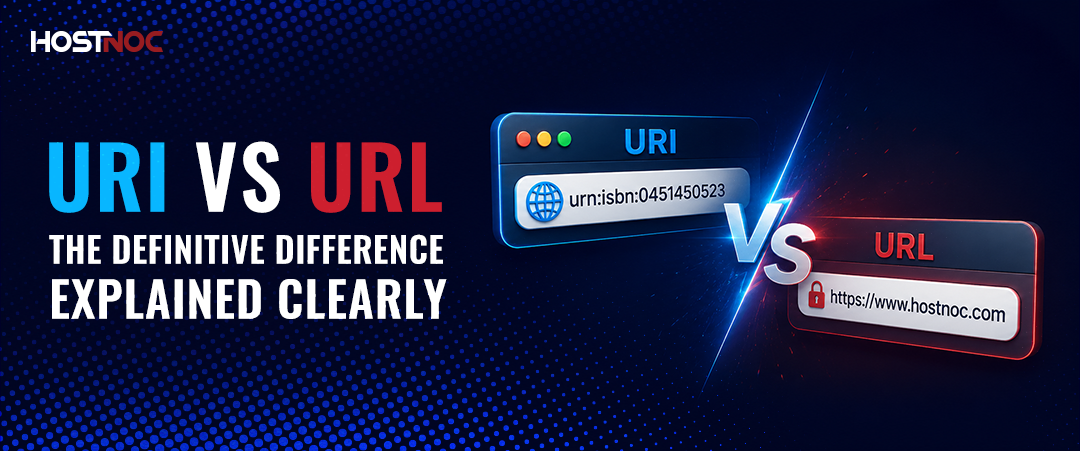
A Uniform Resource Identifier (URI) is a string of characters that identifies a resource on a network. It serves as a universal method for naming or locating resources. The concept of URI was standardized by the Internet Engineering Task Force (IETF) and is defined in RFC 3986, which establishes the syntax and semantics for identifying resources on the Internet.
Examples of URIs:
https://example.com/blog
mailto:support@example.com
urn:isbn:9780131103627
ftp://files.example.com
A URI can identify a resource either by:
- Its location
- Its name
This makes URI the broader category.
Key Characteristics of a URI
- Identifies resources uniquely
- Can be a URL, URN or another identifier
- Used extensively in web technologies
- Supports multiple schemes such as HTTP, HTTPS, FTP, Mailto and URN
What Is a URL?
A Uniform Resource Locator (URL) is a specific type of URI that identifies a resource by describing its location and the protocol used to access it.
A URL tells users and systems:
- Where the resource is located
- How to retrieve it
Example:
https://www.example.com/blog/uri-vs-url
In this URL:
- https = protocol
- www.example.com = domain name
- /blog/uri-vs-url = path to the resource
Common URL Schemes
- HTTP
- HTTPS
- FTP
- SFTP
- File
- Mailto
Every URL is a URI but not every URI is a URL.

URI vs URL: The Core Difference
The easiest way to understand URI versus URL is through a simple hierarchy:
URI
├── URL
└── URN
A URI is the parent category while a URL is one type of URI.
URI vs URL Comparison Table
|
Feature |
URI | URL |
|
Full Form |
Uniform Resource Identifier | Uniform Resource Locator |
|
Purpose |
Identifies a resource | Identifies and locates a resource |
|
Scope |
Broader concept | Subset of URI |
| Includes Location | Not always |
Always |
| Includes Protocol | Not required |
Required |
| Can Be a URN | Yes |
No |
| RFC Standard | RFC 3986 |
RFC 3986 |
What Is a URN?
To fully understand URI and URL, it’s important to know about URNs (Uniform Resource Names). A URN identifies a resource by name rather than location.
Example:
urn:isbn:9780131103627
This URN identifies a book using its ISBN but does not tell you where to find the book online.
URI Categories
|
Type |
Example |
|
URI |
Generic identifier |
| URL | |
| URN |
Urn:isbn:9780131103627 |
URI Structure Explained
A URI generally follows this syntax:
scheme: [//authority]path[?query][#fragment]
Example: https://example.com/products?id=10#reviews
Components:
|
Component |
Description |
|
Scheme |
https |
|
Authority |
example.com |
| Path |
/products |
| Query |
id=10 |
| Fragment |
reviews |
These components are fundamental to modern web architecture and API design.
URL Structure Explained
A URL contains all the information necessary to locate a resource.
Example: https://www.example.com/blog/article.html
Breakdown:
|
Component |
Value |
|
Protocol |
HTTPS |
|
Hostname |
|
|
Domain |
example.com |
|
Path |
/blog/article.html |
This structure enables web browsers such as Google Chrome, Mozilla Firefox, Microsoft Edge and Safari to retrieve resources from web servers.
URI vs URL in Web Development
Understanding URI web concepts is particularly important in modern application development.
REST APIs
API endpoints are commonly referred to as URIs.
Example: /api/users/123
When accessed through a protocol and host: https://api.example.com/users/123
It becomes a URL.
XML Namespaces
XML technologies frequently rely on URIs to uniquely identify namespaces.
Semantic Web
Technologies developed by the World Wide Web Consortium (W3C) use URIs extensively to identify resources and relationships.

Why Do People Confuse URIs and URLs?
Several reasons contribute to the confusion:
1. URLs Are More Common
Most internet users interact with URLs daily through browsers.
2. Many URIs Are URLs
The majority of URIs seen on the web are also URLs.
3. Browser Interfaces
Web browsers often label addresses simply as URLs, even when discussing broader URI concepts.
4. Historical Usage
Documentation and educational resources have frequently used the terms interchangeably.
Real-World Examples of URI vs URL
Example 1: URL
https://www.wikipedia.org
This identifies and locates a website.
Example 2: URN
urn:isbn:9780262033848
This identifies a publication without specifying its location.
Example 3: Mailto URI
mailto:contact@example.com
This identifies an email destination.
URI or URL: Which Term Should You Use?
Use URL when:
- Referring to website addresses
- Discussing hyperlinks
- Talking about web navigation
- Sharing web pages
Use URI when:
- Discussing standards
- Designing APIs
- Working with XML namespaces
- Writing technical specifications
- Referring to resource identifiers in general
For most everyday web discussions, a URL is perfectly acceptable. In technical contexts, URI is often the more precise term.

SEO Perspective: Does URI vs URL Matter?
For SEO professionals, URLs are more relevant because search engines such as Google and Bing crawl, index and rank resources using URLs.
Best practices include:
- Using descriptive URLs
- Keeping URLs concise
- Avoiding unnecessary parameters
- Implementing HTTPS
- Creating logical URL structures
While URI terminology may appear in technical documentation, SEO primarily focuses on URL optimization.
Common Misconceptions About URI and URL
Myth 1: URI and URL Are Identical
They are closely related but not identical.
Myth 2: Every URI Is a URL
False. URNs are URIs but not URLs.
Myth 3: URLs Must Start With HTTP
URLs can use many schemes including FTP, SFTP, File, and Mailto.
Myth 4: URIs Are Obsolete
URIs remain a foundational component of modern internet standards.
Frequently Asked Questions About URI vs URL

What is the difference between URL and URI?
A URI identifies a resource, while a URL identifies a resource and specifies how to access it. URLs are a subset of URIs.
Is a URL a URI?
Yes. Every URL is considered a URI because it identifies a resource.
Is every URI a URL?
No. URNs and other identifiers are URIs but not URLs because they do not specify a location.
What does URI stand for?
URI stands for Uniform Resource Identifier.
What does URL stand for?
URL stands for Uniform Resource Locator.
Why is URI broader than URL?
URI encompasses all methods of identifying resources, including URLs and URNs, whereas URLs only describe resource locations.
Should developers use URI or URL?
Use URI when discussing resource identifiers generally. Use URL when referring specifically to web addresses and locations.
Are APIs using URLs or URIs?
Technically, APIs expose URIs. When those URIs include protocol and host information, they become URLs.
What is a URN?
A Uniform Resource Name (URN) identifies a resource by name rather than by location.
Why do people use URI and URL interchangeably?
Because most URIs encountered on the internet are URLs, the terms are often used interchangeably in everyday discussions.

Featured Post
Bare Metal vs Cloud Computing: A Comprehensive Comparison
Key Takeaways Bare metal servers deliver maximum performance, full hardware control, and...

Sarmad Hasan
July 8, 2026

Managed vs. Unmanaged VPS: A Total Cost of Ownership (TCO) Breakdown
Choosing between managed and unmanaged VPS hosting is not just a technical...
Sarmad Hasan
July 3, 2026

Windows VPS Hosting vs Linux VPS Hosting: A Detailed Comparison
Key Takeaways VPS hosting provides dedicated resources and full server control, offering...
Sarmad Hasan
June 26, 2026