Blogs

7 Reasons Why You Should Move Your E-Commerce Store to The Cloud
September 7, 2018
Website Maintenance Proven Methods for Reliable Performance
September 14, 2018
on
Why Is a Dedicated Server for E-Commerce a Smart Move?

A dedicated server for e-commerce websites is the optimal hosting solution. It delivers exclusive CPU, RAM, and bandwidth with no resource-sharing, resulting in faster page loads, higher uptime, and stronger security. E-commerce stores on dedicated servers can significantly increase conversion rates for visitors compared to those on shared hosting, due to faster load times and uninterrupted availability.
A dedicated server for e-commerce websites is the optimal hosting solution. It delivers exclusive CPU, RAM, and bandwidth with no resource-sharing, resulting in faster page loads, higher uptime, and stronger security. E-commerce stores on dedicated servers can significantly increase conversion rates for visitors compared to those on shared hosting, due to faster load times and uninterrupted availability.
Table of Contents
- Key Takeaways
- Why Hosting Infrastructure Determines E-Commerce Success
- Shared Hosting vs. Dedicated Server for E-Commerce: A Direct Comparison
- Why Shared Hosting Fails E-Commerce Websites
- What a Dedicated Server Delivers for E-Commerce
- Page Speed, Google Rankings, and Dedicated Hosting: The Direct Connection
- Dedicated Server Hosting for WooCommerce and Magento
- When to Migrate from Shared Hosting to a Dedicated Server
- How HostNOC Dedicated Servers Are Configured for E-Commerce
- Summary: Dedicated Server Hosting Is the Infrastructure Foundation for E-Commerce Growth
Key Takeaways
- Shared hosting fails due to e-commerce resource contention, causing downtime during traffic spikes (holiday seasons, flash sales).
- Dedicated servers provide 99.99% uptime, exclusive IP addresses, and isolated security environments.
- Page speed directly impacts revenue; a 1-second delay in load time reduces conversions by 7%.
- Google’s ranking algorithm rewards speed, making dedicated hosting an indirect SEO asset.
- Dedicated servers scale on demand, supporting enterprise-level traffic without performance degradation.
- HostNOC dedicated servers offer fully managed configurations tailored for WooCommerce, Magento, and custom e-commerce stacks.
Why Hosting Infrastructure Determines E-Commerce Success
More than 80% of online shoppers are more likely to return to a website that delivers a fast, reliable, and seamless user experience. Conversion rates, bounce rates, and search rankings all trace back at least in part to one foundational decision: where and how you host your online store. These performance outcomes are often reflected in a detailed ranking report, which highlights how hosting quality influences your site’s visibility in search results.
Marketing campaigns drive traffic. Hosting infrastructure determines whether that traffic converts.
An e-commerce platform is not a static brochure site. It processes live inventory queries, payment transactions, user authentication, dynamic pricing, and real-time cart updates simultaneously. These operations are memory-intensive, CPU-dependent, and latency-sensitive.
The hosting environment you choose directly determines how well your store handles this load and whether customers stay or leave.
Learn More: Dedicated Server for Ecommerce: What, Why, and How?
Shared Hosting vs. Dedicated Server for E-Commerce: A Direct Comparison
The difference between shared hosting and dedicated servers directly impacts performance, security, and scalability:
|
Feature |
Shared Hosting |
Dedicated Server |
|
Resource Allocation |
Shared among 100s of sites |
100% exclusive to your site |
|
Uptime During Traffic Spikes |
Unreliable |
Consistent (99.99% SLA) |
|
Page Load Speed |
Variable |
Consistently fast |
|
Security Isolation |
None |
Full isolation |
|
IP Address |
Shared |
Unique |
|
Scalability |
Limited |
High |
|
Cost |
Low ($3–$15/month) |
Higher ($80–$500+/month) |
|
Best For |
Blogs, portfolios |
E-commerce, enterprise sites |
Learn More About: Shared Hosting and Dedicated Hosting: 7 Major Differences
Why Shared Hosting Fails E-Commerce Websites
The Resource Contention Problem
In a shared hosting environment, hundreds of websites operate on a single physical server. Every site draws from the same pool of CPU cycles, RAM, storage I/O, and network bandwidth.
When one site experiences a traffic surge, every other site on that server suffers. This is not a theoretical risk; it is a documented, recurring pattern that hosting providers call the “noisy neighbor” effect.
For an e-commerce store, this translates directly into:
- Slow product page rendering
- Timed-out checkout sessions
- Payment gateway failures
- Abandoned carts and lost revenue
Traffic Spikes Expose the Weakness
Holiday shopping seasons, such as Black Friday, Cyber Monday, Christmas, and New Year’s, generate exponential traffic spikes. During these windows, shared hosting environments routinely buckle under load.
A 2023 Akamai study found that a 100-millisecond delay in response time reduces conversion rates by 7%. During peak seasons, shared hosting delays frequently exceed 2–5 seconds, representing a conversion loss of 40–70%.
That is not a hosting inconvenience. That is a business emergency.
Shared Hosting Creates Compounding Security Risks
Security on shared hosting operates at the server level, not the site level. If a single website on the shared environment is infected with malware, ransomware, or an SQL injection payload, the infection propagates across the entire server.
3 specific security risks on shared hosting include:
- Cross-site contamination malware from one site reaches the file systems of neighboring sites
- Shared SSL vulnerabilities compromised shared certificates, affecting all hosted domains
- IP reputation damage if any site on your shared IP sends spam, your IP is blacklisted, harming your email deliverability and SEO rankings
What a Dedicated Server Delivers for E-Commerce
Exclusive Resource Allocation
A dedicated server is a single physical machine allocated entirely to one client. No resource-sharing. No performance interference. No noisy neighbors.
Your store receives 100% of the server’s CPU, RAM, storage, and bandwidth regardless of traffic volumes on the rest of the internet.
This means product pages can achieve sub-second load times with proper configuration, even during peak traffic events. Checkout flows complete without timeout errors. Search and filtering queries return results instantly.
Maximum Uptime: The Revenue Metric Most Stores Ignore
Uptime is not a technical metric; it is a revenue metric.
Consider a store generating $50,000/month in revenue. At 99.9% uptime (shared hosting typical), the store experiences approximately 8.7 hours of downtime per year. At an average hourly revenue of $69, that represents $600+ in direct lost revenue annually before accounting for customer trust erosion and abandoned returning visitors.
Dedicated servers deliver 99.99% uptime, reducing annual downtime to under 1 hour. For high-revenue stores, this difference compounds into tens of thousands of dollars in recovered revenue.
Isolated Security Architecture
A dedicated server creates a completely isolated hosting environment. Threats targeting other websites on the internet have no pathway into your infrastructure unless they directly target your IP.
4 security advantages of dedicated server hosting for e-commerce:
- Firewall customization configures rules specific to your traffic patterns, blocking known threat vectors
- DDoS mitigation at the hardware level absorbs volumetric attacks without affecting site availability
- PCI DSS compliance readiness in dedicated environments is significantly easier to certify for the payment card industry standards
- Rapid incident isolation in the event of a compromise, lock down the server without affecting any other business infrastructure.
Unique IP Address: SEO and Deliverability Benefits
On shared hosting, your website shares an IP address with dozens or hundreds of other sites. If any of those sites engage in spam, black-hat SEO, or malicious activity, the shared IP is blacklisted, and your store’s email deliverability and organic search presence suffer alongside them.
A dedicated server provides a unique IP address exclusively tied to your domain. Your IP reputation is entirely within your control, which directly benefits:
- Transactional email deliverability (order confirmations, shipping updates)
- Domain authority and search ranking signals
- SSL certificate trust chains
Page Speed, Google Rankings, and Dedicated Hosting: The Direct Connection
Google’s Core Web Vitals Largest Contentful Paint (LCP), Interaction to Next Paint (INP), and Cumulative Layout Shift (CLS) are confirmed ranking signals. All 3 metrics are directly influenced by server response time.
Google’s recommended server response time (Time to First Byte) is under 200ms. Shared hosting environments routinely exceed 600–1200ms under normal load. Dedicated servers consistently deliver TTFB under 100ms with proper configuration.
The downstream effect: stores on dedicated servers rank higher organically, generate more free search traffic, and reduce dependence on paid acquisition, compounding ROI over time.
Dedicated Server Hosting for WooCommerce and Magento
WooCommerce on a Dedicated Server
WooCommerce, built on WordPress, is the world’s most widely used e-commerce platform with over 6.6 million active installations as of 2024. It is also one of the most resource-intensive PHP applications in production use.
WooCommerce stores with more than 500 product SKUs, active coupons, and integrated payment gateways routinely saturate shared hosting environments. A dedicated server with at minimum 8GB RAM, SSD NVMe storage, and a modern Intel Xeon or AMD EPYC CPU provides the baseline infrastructure WooCommerce needs to perform reliably.
Learn About: WooCommerce Reporting Plugin: Everything You Need To Know
Magento on a Dedicated Server
Magento (now Adobe Commerce) is the enterprise-grade e-commerce platform of choice for large catalogs and complex B2B workflows. Magento’s official system requirements explicitly recommend dedicated server environments for production deployments.
Magento 2 open-source requires:
- Minimum 2GB RAM (4GB+ recommended for production)
- PHP 8.1 or 8.2
- MySQL 8.0 or MariaDB 10.6
- Elasticsearch or OpenSearch for catalog search
All of these requirements are best met and best optimized on a dedicated server where resource allocation is guaranteed, and configuration is fully customizable.
Read About: 10 Reasons Why Experts Choose Magento For E-Commerce Website
When to Migrate from Shared Hosting to a Dedicated Server
Migrate to a dedicated server when any of the following conditions apply:
- Monthly store revenue exceeds $5,000 (downtime risk now outweighs hosting cost differential)
- Product catalog exceeds 1,000 SKUs
- Average monthly unique visitors exceed 20,000
- You are running paid advertising and cannot afford checkout failures
- You are preparing for a high-traffic campaign (sale, product launch, seasonal event)
- Your current host reports repeated CPU limit throttling
Do you know that: When to move from Shared Hosting to a Dedicated Server
How HostNOC Dedicated Servers Are Configured for E-Commerce
HostNOC provides fully managed dedicated server plans built specifically for e-commerce workloads. Key differentiators include:
- NVMe SSD storage for sub-millisecond disk I/O on product queries and session data
- Redundant network connectivity with BGP failover to eliminate single points of failure
- Free SSL certificates and dedicated IP provisioning on all plans
- 24/7 managed support with e-commerce platform expertise (WooCommerce, Magento, OpenCart, PrestaShop)
- DDoS protection included as standard, not an add-on
- Scalable RAM and CPU upgrades without server migration or downtime

Summary: Dedicated Server Hosting Is the Infrastructure Foundation for E-Commerce Growth
Shared hosting is an acceptable starting point for informational websites. For e-commerce, it is a structural liability.
The 5 core reasons e-commerce stores run on dedicated servers:
- Exclusive resources eliminate performance degradation during traffic spikes
- 99.99% uptime guarantees protect revenue during peak shopping seasons
- Isolated security architecture meets PCI DSS requirements and prevents cross-site contamination
- Dedicated IP addresses protect SEO rankings and email deliverability
- Faster server response times improve Core Web Vitals scores and organic search rankings
Every dollar spent on dedicated hosting infrastructure is a direct investment in conversion rate, customer retention, and long-term revenue growth.
Frequently Asked Questions About Dedicated Server for E-Commerce

Is a dedicated server necessary for a small e-commerce store?
A dedicated server becomes necessary when your store generates more than $3,000–$5,000 per month in revenue, hosts over 500 products, or runs paid traffic campaigns. Below this threshold, a managed VPS (Virtual Private Server) is a cost-effective intermediate step that still provides dedicated resources and improved security over shared hosting.
How much does a dedicated server for e-commerce cost?
Dedicated server plans for e-commerce range from $80 to $500+ per month, depending on CPU cores, RAM, storage type (HDD vs. NVMe SSD), and managed service level. Entry-level plans (4-core, 16GB RAM, 500GB SSD) start around $80–$120/month and handle most mid-sized WooCommerce stores effectively.
What is the difference between a dedicated server and a VPS for e-commerce?
A dedicated server provides an entire physical machine exclusively for one user, while a VPS (Virtual Private Server) is a virtualized partition of a shared physical machine. Dedicated servers deliver superior raw performance, full hardware control, and no hypervisor overhead, making them the preferred choice for high-traffic or high-transaction e-commerce environments.
Does dedicated hosting improve e-commerce SEO rankings?
Yes. Dedicated hosting improves e-commerce SEO through 3 mechanisms: faster Time to First Byte (TTFB) improves Core Web Vitals scores, higher uptime prevents crawl budget waste from downtime errors, and a dedicated IP address protects domain authority from neighbor IP blacklisting.
Can dedicated servers handle Black Friday traffic spikes?
Yes. A properly provisioned dedicated server handles Black Friday and Cyber Monday traffic spikes by delivering consistent, non-shared compute resources regardless of external traffic conditions. Additionally, dedicated server configurations support caching layers (Redis, Varnish), CDN integration, and load balancer setups that further absorb sudden traffic surges.
Is a dedicated server more secure than shared hosting for processing payments?
Yes. Dedicated servers are inherently more secure for payment processing because they provide full environment isolation, customizable firewall rules, and a clear path to PCI DSS compliance. Shared hosting environments cannot achieve PCI DSS certification due to multi-tenant architecture, which introduces uncontrollable compliance variables.
How does server location affect e-commerce performance?
Server location affects e-commerce performance through network latency. The physical distance between your server and your customers directly determines response times. A store targeting customers in the United States performs best with servers in US-based data centers (New York, Dallas, Los Angeles). Every 1,000km of additional network distance adds approximately 5–10ms of latency.
What operating system is best for a dedicated e-commerce server?
Linux-based operating systems, specifically Ubuntu 22.04 LTS or AlmaLinux 9, are the optimal choice for dedicated e-commerce servers. Linux delivers lower memory overhead, superior process isolation, native compatibility with the LAMP/LEMP stack, and a significantly smaller attack surface compared to Windows Server environments.

Featured Post
VPS Hosting for WooCommerce Stores: Why It Is Essential?
Table of Contents What Is VPS Hosting? Why use VPS Hosting for WooCommerce Stores? 1. Performance and Speed Optimization 2. Improved Scalability 3. Enhanced Security 4. […]

Muhammad Osama
July 7, 2025
Magento Optimized Dedicated Servers: Supercharge Your eCommerce Site
Table of Contents What Are Magento Optimized Dedicated Servers? Common Magento Optimization Features: Why Choose a Magento Optimized Dedicated Server? 1. Superior Speed and Performance 2. […]
Muhammad Osama
July 2, 2025
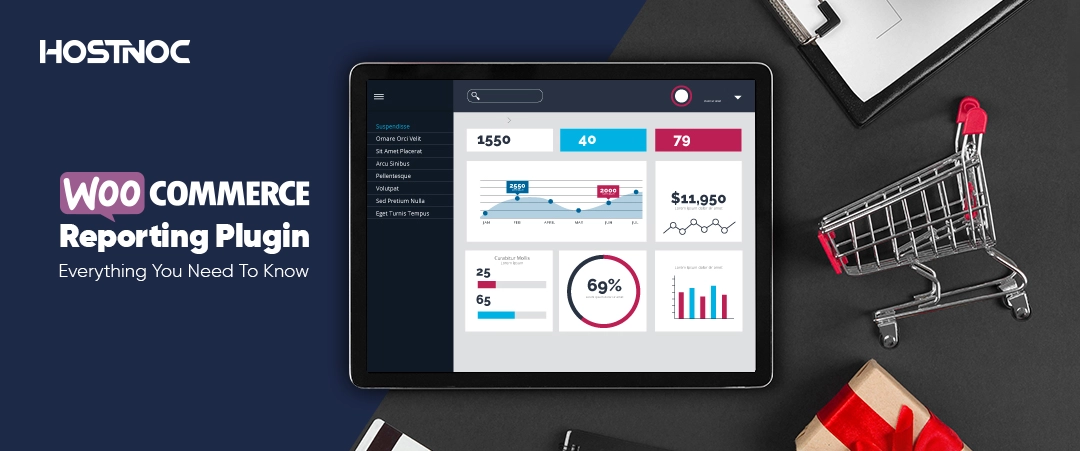
WooCommerce Reporting Plugin: Everything You Need To Know
WooCommerce, the renowned e-commerce plugin for WordPress, has revolutionized online selling by providing a user-friendly platform for businesses of all sizes. One of the key elements […]
Muhammad Osama
April 15, 2024