Blogs
on
Proven Guide to Dedicated Hosting for Serious Growth in 2026

Dedicated hosting provides your website or app with exclusive access to a physical server with no resources shared at all. It offers the best performance, maximum security, and total configuration freedom compared to other types of hosting services. Dedicated hosting is the ideal solution for high-traffic sites, eCommerce sites, SaaS apps, and game servers.
Dedicated hosting provides your website or app with exclusive access to a physical server with no resources shared at all. It offers the best performance, maximum security, and total configuration freedom compared to other types of hosting services. Dedicated hosting is the ideal solution for high-traffic sites, eCommerce sites, SaaS apps, and game servers.
Key Takeaways
- A dedicated server refers to a physical machine used exclusively by one client without sharing CPU, RAM, and storage.
- Dedicated hosting offers superior performance, security, and control compared to shared, VPS, and cloud hosting.
- In managed dedicated hosting, the server management is done for you whereas unmanaged offers total root access.
- The specifications of hardware such as CPU, RAM, SSD/NVMe storage, and bandwidth, define your performance level.
- Compared to VPS and shared hosting plans, dedicated hosting is expensive but offers unmatched value.
- The ideal situation for dedicated hosting is when there is a traffic spike, poor performance, and compliance issues.
What Is Dedicated Hosting?
Dedicated hosting provides you with a physical server that will be dedicated solely to your website or application. There is no other user who would share the CPU, RAM, storage, or bandwidth with you. The use of all resources on that computer will be solely yours.
This differs greatly from the shared hosting services in which dozens of users use the same hardware. It also differs from VPS hosting, in which many virtual machines use one and the same physical machine. In the case of dedicated hosting, the whole bare metal machine belongs to you.
This allows achieving predictable and fast performance, as well as complete freedom in configuring the server.
For a broader look at how dedicated servers have evolved, read: Past, Present, and Future of Dedicated Servers.

How Dedicated Hosting Works
Once you decide to go for a dedicated hosting solution, the web host will install your selected hardware on their premises, linking it to their own network structure. You will receive:
- A dedicated IP address (or several)
- Unrestricted access to the operating system (as an administrator/root)
- Full use of the CPU and RAM resources
- Complete control over firewall settings and server configuration
While the web host takes care of the physical layer (power supply, hardware maintenance, and other aspects), you take care of everything that happens within the server itself.
No hypervisor or virtualization layer will sit between your application and the hardware. It is for this reason that dedicated servers, or bare-metal servers, offer better performance compared to virtualized servers for I/O-heavy workloads, real-time applications, and high concurrency scenarios.
Benefits of Dedicated Hosting
1. Performance
With all server resources dedicated to your workload, you deliver consistent, high-speed performance to every user. There are no noisy neighbors consuming CPU cycles or memory bandwidth. High-traffic eCommerce platforms, streaming services, and data-heavy applications run noticeably faster on dedicated infrastructure.
2. Reliability
Dedicated hosting handles sudden traffic spikes without service degradation. Because no other tenant competes for resources, your uptime stays predictable. Top-tier providers back this with 99.9% uptime SLAs.
3. Security
Your server hosts only your data. There is no risk of cross-site contamination from a compromised neighbor. You implement security policies, firewall rules, and access controls that match your exact compliance requirements whether that is HIPAA, PCI-DSS, SOC 2, or GDPR.
For a full breakdown of how to lock down your server, see: How to Make Dedicated Servers More Secure.
4. Control
Install any OS, configure any software stack, and tune the server to match your exact workload. Whether you run Windows Server, Ubuntu, CentOS, or a custom Linux distribution, dedicated hosting accommodates it. Compare options here: Windows Dedicated Server vs. Linux Dedicated Server.
5. Support
Reputable dedicated hosting providers offer 24/7 technical support. Server configuration issues, network incidents, and hardware failures get resolved by experienced engineers at any hour.
Dedicated Hosting vs. Other Hosting Types
Understanding where dedicated hosting sits relative to other options makes the decision straightforward.
| Hosting Type | Resource Control | Performance | Security | Best For |
| Shared Hosting | Minimal | Low | Low | Small blogs, starter websites |
| VPS Hosting | Moderate | Medium | Medium | Growing apps, dev/staging |
| Cloud Hosting | Good | Flexible | Medium | Variable/elastic workloads |
| Dedicated Hosting | Full | Highest | Highest | High-traffic, compliance-heavy, mission-critical |
Shared vs. Dedicated: Shared hosting puts many websites on one machine. Dedicated hosting reserves the entire machine for you. The performance gap is significant once traffic grows beyond a few thousand daily visitors. Read more: Shared vs. Dedicated Hosting.
VPS vs. Dedicated: VPS creates isolated virtual environments on shared hardware. It costs less but delivers less raw power and has no direct hardware access. For applications that need consistent I/O throughput, dedicated wins. Full comparison: Dedicated vs. VPS Hosting.
Cloud vs. Dedicated: Cloud hosting scales elastically but runs on virtualized infrastructure, which adds latency and reduces raw throughput. Dedicated hosting delivers higher and more consistent performance for predictable, resource-intensive workloads. Detailed breakdown: Dedicated Server vs. Cloud Server.
Types of Dedicated Servers
Dedicated servers fall into several categories based on their intended workload. The 6 most common types are:
- File Servers: Store and distribute files across a network
- Database Servers: Run MySQL, PostgreSQL, MongoDB, or enterprise database engines under heavy query loads
- Application Servers: Host backend applications, APIs, and microservices
- Web Servers: Deliver web pages and handle HTTP/HTTPS traffic at scale
- Communication Servers: Power VoIP, messaging, and real-time collaboration platforms
- GPU Servers: Handle AI/ML workloads, video rendering, and high-performance computing
For a complete breakdown of every category, read: Types of Dedicated Servers.
Storage configuration also matters significantly. NVMe drives outperform SATA SSDs by up to 5x in random read/write operations. Compare your options: SSD vs. NVMe Dedicated Server and HDD vs. SSD Dedicated Servers.

When to Switch to Dedicated Hosting
The right time to move to dedicated hosting is when your current infrastructure cannot keep up with your business requirements. Here are 4 clear indicators:
- Traffic volume is growing consistently. If your website regularly handles tens of thousands of daily visitors, shared or VPS hosting creates performance bottlenecks. Dedicated hosting removes those constraints entirely.
- Performance directly affects revenue. For eCommerce stores, SaaS platforms, and financial applications, every millisecond of latency costs money. A 1-second delay in page load time reduces conversions by an average of 7%. Dedicated hosting eliminates the shared resource bottleneck that causes those delays.
- Compliance requires data isolation. Healthcare, finance, and government organizations operate under strict regulatory frameworks that mandate physical data isolation. Dedicated hosting satisfies those requirements. See: Dedicated Server for Fintech, and Dedicated Server for Government.
- You are outgrowing your current plan. If you are constantly hitting CPU or memory limits on a VPS, or if your shared hosting provider has throttled your account, it is time to upgrade. See how to make that transition: How to Move from Shared Hosting to a Dedicated Server.
How to Choose the Right Dedicated Server
Selecting the right dedicated server requires evaluating 5 core factors:
1. Hardware Specifications
Match hardware to your actual workload, not just your budget. Key specs to evaluate:
- CPU: The number of cores and clock speed determine how many concurrent processes you handle. Multi-core Intel Xeon and AMD EPYC processors are standard for server workloads.
- RAM: 16 GB handles most web applications. Database servers and virtualization hosts benefit from 64 GB to 256 GB.
- Storage: NVMe SSDs for latency-sensitive databases. SATA SSDs for general web hosting. HDDs for bulk storage and backups.
- Bandwidth: High-traffic sites and streaming platforms need unmetered or high-cap plans. Read: Dedicated Server with Unlimited Bandwidth.
For a complete hardware selection walkthrough, see: Best Dedicated Server Guide for Maximum Performance.
2. Operating System and Software Stack
Choose an OS that matches your application requirements. Linux distributions (Ubuntu, CentOS, Debian) suit most web and database workloads and carry lower licensing costs. Windows Server is required for ASP.NET applications, Active Directory, and Microsoft SQL Server environments.
3. Managed vs. Unmanaged
If your team lacks dedicated sysadmin capacity, managed hosting is the practical choice. If you have experienced Linux administrators, unmanaged hosting gives you maximum flexibility at a lower cost.
4. Backup and Disaster Recovery
Confirm that your provider offers automated backups and a defined recovery time objective (RTO). Ask specifically: how frequently are backups taken, where are they stored, and how long does full restoration take? Details on backup-ready plans: Dedicated Server with Backup.
5. DDoS Protection and Security Add-ons
Volumetric DDoS attacks can take an unprotected server offline in minutes. Choose a provider with built-in DDoS mitigation or an available add-on. See: Dedicated Server with DDoS Protection.
Beyond hardware, read customer reviews on independent platforms, check uptime track records, and evaluate support response times before committing to a provider.
See also: How Affordable Dedicated Servers Can Help Your Business and Save Money on Buying a Dedicated Server.
Common Use Cases for Dedicated Hosting
Dedicated hosting serves specific industries and workloads where performance, security, and uptime are non-negotiable. The 12 most common use cases include:
- eCommerce: High-transaction-volume stores need fast page loads and PCI-DSS compliance: Dedicated Server for eCommerce
- SaaS Applications: Multi-tenant platforms with variable user loads: Dedicated Server for SaaS Startups
- Big Data and Analytics: Large-scale data ingestion and real-time processing: Dedicated Server for Big Data Analytics
- Media and Streaming: High-bandwidth video and audio delivery: Dedicated Server for Media
- Software Development: Isolated CI/CD pipelines and staging environments: Dedicated Server for Software Development
- App Development: Backend infrastructure for mobile and web apps: Dedicated Server for App Development
- Gaming: Low-latency multiplayer game servers: Dedicated Server for FiveM
- Crypto Mining: High-uptime mining infrastructure: Dedicated Server for Crypto Mining
- Education: Learning management systems and student portals: Dedicated Server for Education
- Healthcare: HIPAA-compliant patient data platforms: Dedicated Server for Healthcare
- Video Editing: GPU-accelerated rendering pipelines: Dedicated Server for Video Editing
- Telecom: VoIP and communications infrastructure: Dedicated Server for Telecommunication
Businesses of all sizes rely on dedicated hosting. Small businesses benefit from isolated performance at a predictable cost: Dedicated Server for Small Business. Mid-size and large enterprises use it to consolidate workloads: Dedicated Servers for Mid-Size Businesses and Dedicated Servers for Large Businesses.
Managed vs. Unmanaged Dedicated Hosting
This is one of the most important decisions when choosing a dedicated server plan.
Managed Dedicated Hosting means the provider handles OS patching, security updates, performance monitoring, and server-level troubleshooting. You focus entirely on your application and business. This is the right choice for teams without a dedicated infrastructure engineer.
Unmanaged Dedicated Hosting gives you root access and full control over every aspect of the server. The provider maintains the physical hardware and network. Everything above the OS layer is your responsibility. This suits teams with experienced system administrators who want maximum flexibility.
The cost difference between managed and unmanaged plans is typically $50 to $200 per month, depending on the scope of management. Full breakdown: Managed vs. Unmanaged Server Hosting.
Not sure if dedicated is the right fit yet? A semi-dedicated server offers a middle ground between VPS and full dedicated, at a lower cost.
Final Thoughts
Dedicated hosting is the most capable and reliable hosting infrastructure available for production workloads. It delivers complete resource isolation, maximum performance, full configuration control, and the security baseline required by regulated industries.
The key decision points are: managed vs. unmanaged, hardware specification, OS choice, and whether your workload justifies the cost over VPS or cloud alternatives. For most businesses crossing 50,000 monthly visitors, running mission-critical applications, or operating under compliance mandates, dedicated hosting is not just an option. It is the correct infrastructure choice.
Frequently Asked Questions About Dedicated Server for Crypto Mining Bots

What is dedicated hosting?
Dedicated hosting is a web hosting model where one physical server is reserved exclusively for a single client. The client gets full access to all CPU, RAM, storage, and bandwidth on that machine, with no resource sharing.
How is dedicated hosting different from VPS?
A VPS runs as a virtual machine on shared physical hardware. A dedicated server is an entire physical machine assigned to one client. Dedicated hosting delivers higher performance, better I/O throughput, and stronger isolation than any VPS plan.
Who needs dedicated hosting?
Dedicated hosting is the right fit for high-traffic websites, eCommerce platforms, SaaS products, gaming servers, healthcare and financial applications, and any workload where performance, uptime, and data isolation are business-critical.
How much does a dedicated server cost?
Entry-level dedicated servers start at around $80 to $150 per month. Mid-range configurations with 32 GB RAM and NVMe storage run $200 to $400 per month. High-performance GPU servers for AI/ML workloads cost $500 or more per month.
What is the difference between managed and unmanaged dedicated hosting?
Managed hosting includes server administration from the provider. Unmanaged hosting gives you full root access and places all server management responsibility on you. Managed plans cost more but eliminate the need for in-house sysadmin expertise.
Is dedicated hosting faster than cloud hosting?
For consistent, compute-intensive workloads, dedicated hosting is faster because it eliminates the virtualization overhead present in cloud environments. Cloud hosting offers better elasticity for variable workloads. For predictable, high-load tasks, dedicated hosting wins on raw throughput.
What hardware should I look for in a dedicated server?
Prioritize CPU core count, RAM capacity, and storage type. NVMe SSDs deliver the fastest read/write speeds. For compute-heavy workloads, look for multi-core Intel Xeon or AMD EPYC processors. For AI and rendering, GPU-equipped servers are the correct choice.
Can a small business use dedicated hosting?
Yes. Small businesses with growing traffic, compliance requirements, or performance-sensitive applications benefit directly from dedicated hosting. It removes resource contention and provides a stable, secure foundation for growth.

Featured Post
Dedicated Server for Agencies: A Complete Guide
Agencies today manage multiple client websites, applications, and...

Sarmad Hasan
July 13, 2026
Does Borderlands 3 Have Dedicated Servers?
No. Borderlands 3 does not use dedicated servers. Multi player gaming sessions...

saad ullah
July 8, 2026
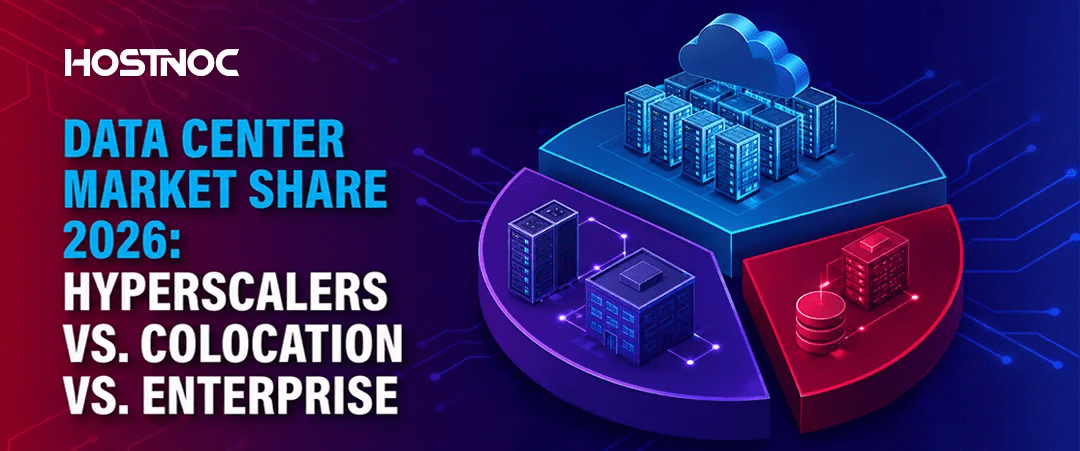
Data Center Market Share 2026: Hyperscalers vs. Colocation vs. Enterprise
The global data center industry is undergoing one of the most significant...
Sarmad Hasan
July 1, 2026